Vertical Turning
Centers & Lathes

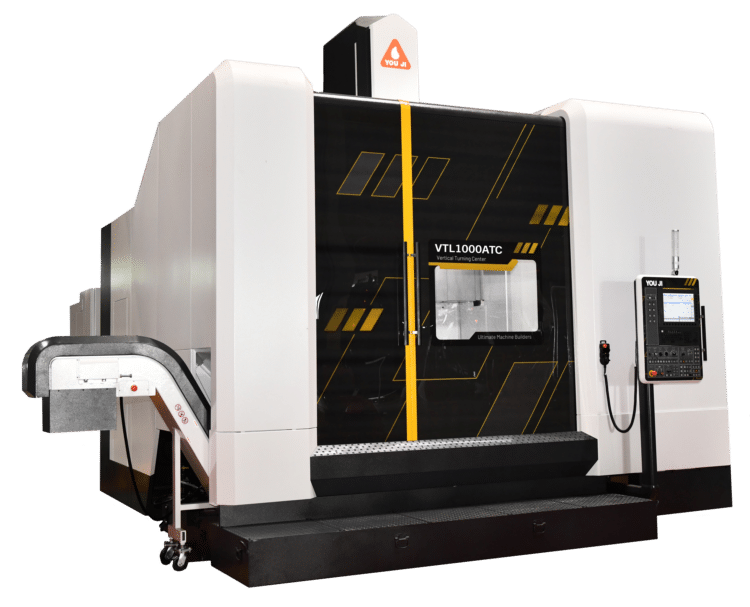
CNC Vertical Lathes & CNC Vertical Turning Centers

You Ji Vertical Turning Centers (VTCs) and Vertical Lathes (VTLs) are heavy-duty CNC machine tools globally recognized for their solid, heavy-weight construction designed and engineered specifically for machining large, heavy, and often asymmetrical components. These machines are widely used across demanding industries such as aerospace, energy, transportation, and heavy equipment manufacturing. For applications beyond the capacities of their standard VTC and VTL lineup, You Ji offers customized machinery solutions, specifically designed, engineered, and built to meet unique and atypical requirements.

You Ji’s CNC Vertical Turning Centers are advanced multi-axis machines that offer exceptional versatility. Featuring live tooling and optional Y-axis capabilities, these machines enable complex milling, drilling, and tapping operations—all within a single setup. The vertical spindle orientation naturally supports heavy workpieces using gravity, while optional C-axis and Y-axis functionality allows for full contouring of intricate geometries. These machines are ideal for precision applications requiring both turning and milling processes. You Ji also offers vertical turning centers with standard CAPTO tooling systems and automatic pallet changer configurations, integrated horizontal side-head models for multitasking, extra large mill-turn centers, and 6-position vertical hex turret machines specifically for making large aluminum wheels or similar parts.

In contrast, You Ji CNC Vertical Lathes are purpose-built for high-precision turning operations, particularly for large and oversized workpieces. Designed for straightforward turning tasks, these machines are available in single or dual ram configurations and can be equipped with various tool changer systems and grinding attachments to suit a wide range of production requirements.

Spindle Speed Variation to Disrupt Chatter and Achieve the Finest Finishes

Spindle Speed Variation (SSV) is a technique that periodically alters the spindle speed during cutting to disrupt the chatter that often occurs when machining at a constant speed. By breaking up harmonic resonance at the point of contact between the cutting tool and the workpiece, SSV helps achieve a smoother surface finish—without the need to reduce cutting parameters or spindle speed, thus maintaining high productivity. This feature is especially beneficial in deep boring or turning operations, as well as when machining long, slender workpieces or thin-walled parts that are prone to vibration.

SSV is a built-in feature on all FANUC Oi-TF Plus CNC controls, while FANUC Model B 16i, 18i, 21i, 30i, 31i, and 32i may require minor parameter configurations. Fanuc 15i, 20i, 160i, 180i, and 210i support SSV, but may be based on specific machine tool builder factory control configurations. Contact Absolute Machine Tools to learn more about integrating this feature to better enhance your company’s machining processes.

Eccentric Turning Operations

Unconventional turned parts — such as those with tapers, elliptical shapes, or varying radii—are ideally machined using Eccentric Turning (EC), a powerful feature from FANUC. Eccentric Turning enables precise machining of off-center workpieces, making it an excellent solution for components like cams, pins, threads, tapers, and other non-circular geometries. It offers outstanding accuracy and significantly reduces setup time.

Custom workholding is required for Eccentric Turning. This typically involves offset chuck jaws or specially designed chucks and faceplates with adjustable offsets to securely hold the part away from the main spindle centerline. For optimal performance, Eccentric Turning should be used in conjunction with Spindle Speed Variation (SSV). Together, these features help control vibration, reduce tool and spindle wear, and improve surface finish quality — especially on unbalanced or asymmetrical parts.

Even on machines without a Y-axis, EC can still be implemented, expanding its applicability across a wide range of turning platforms. Additionally, certain eccentric features can be machined using live tooling and milling operations, offering even greater flexibility.

You Ji’s vertical turning centers and lathes, available in both single and dual ram configurations, are equipped with advanced features like Eccentric Turning and Spindle Speed Variation. When paired with live tooling and Y-axis capabilities, these machines deliver exceptional versatility and performance — setting them apart from most CNC systems available today.

Contact Absolute Machine Tools to learn more about how You Ji machines can elevate your turning operations.

Vertical Turning Centers (VTCs)
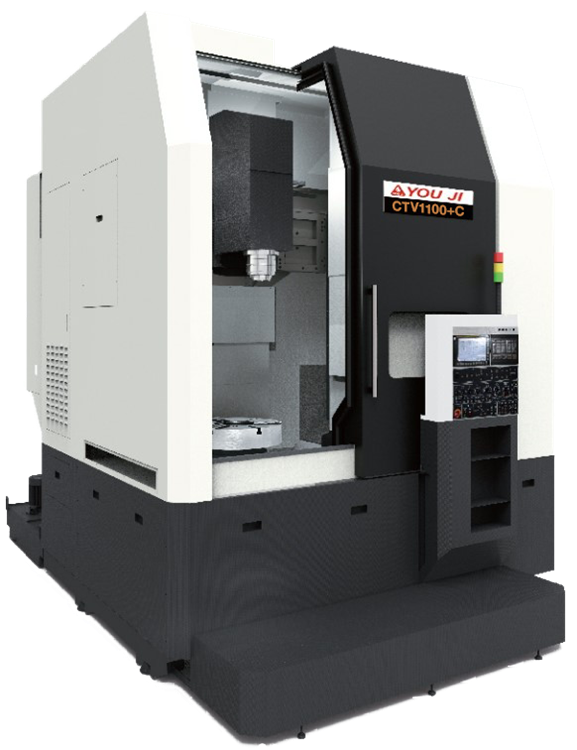
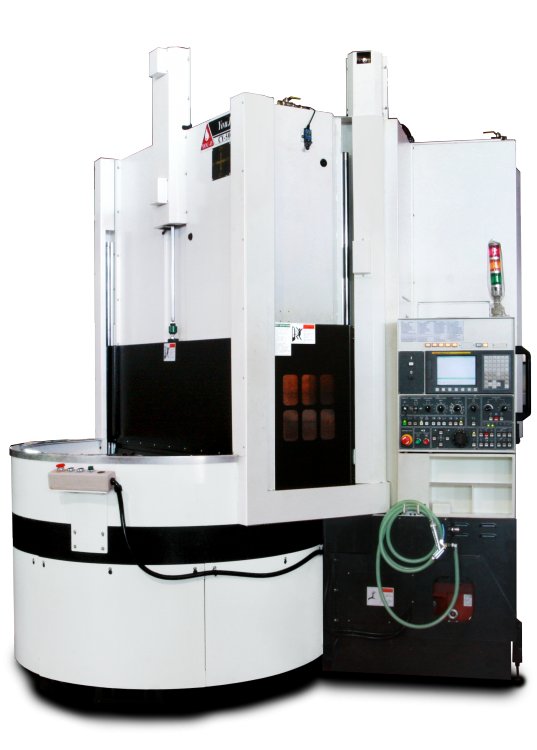
You Ji CTV Series

Vertical Turning Centers with ATC & CAPTO Tooling

You Ji CY Series

Vertical Turning Centers with Automatic Pallet Changers

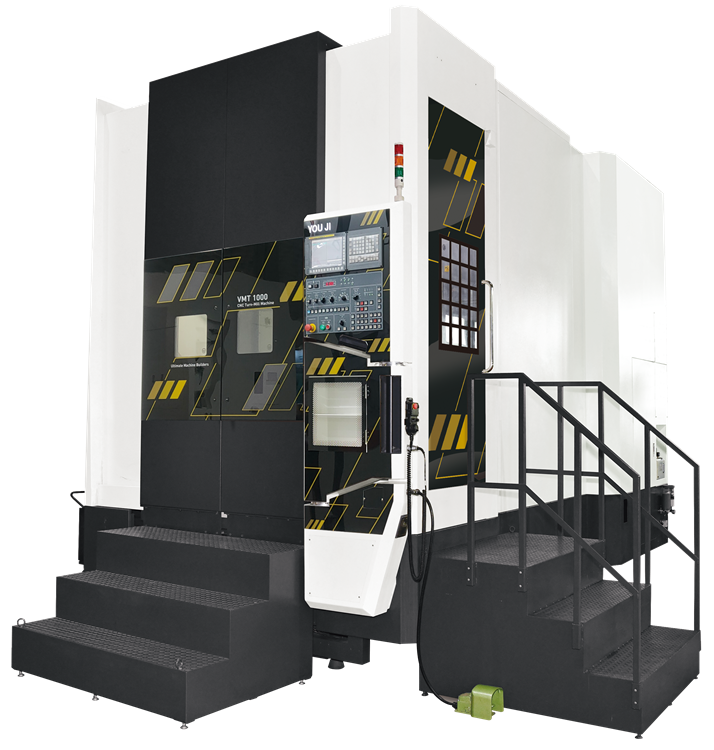
You Ji VMT Series

Vertical Mill-Turn Centers

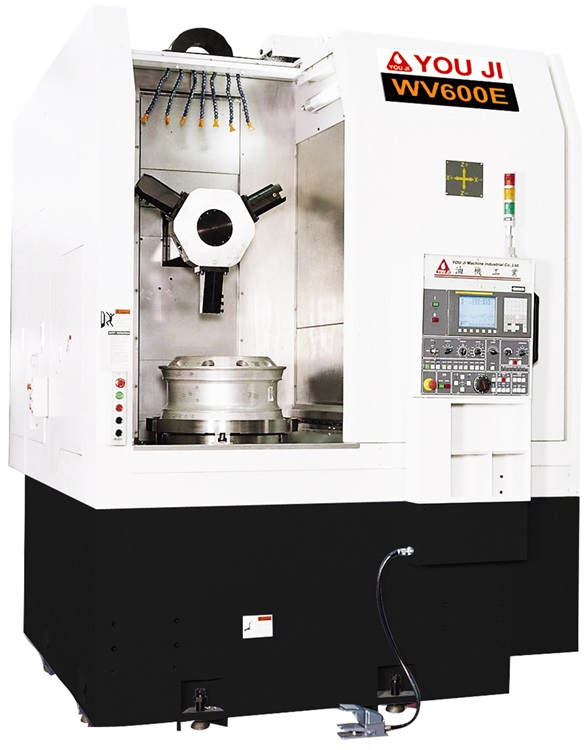
You Ji WV Series

Vertical Turning Centers for Aluminum Wheels & Parts

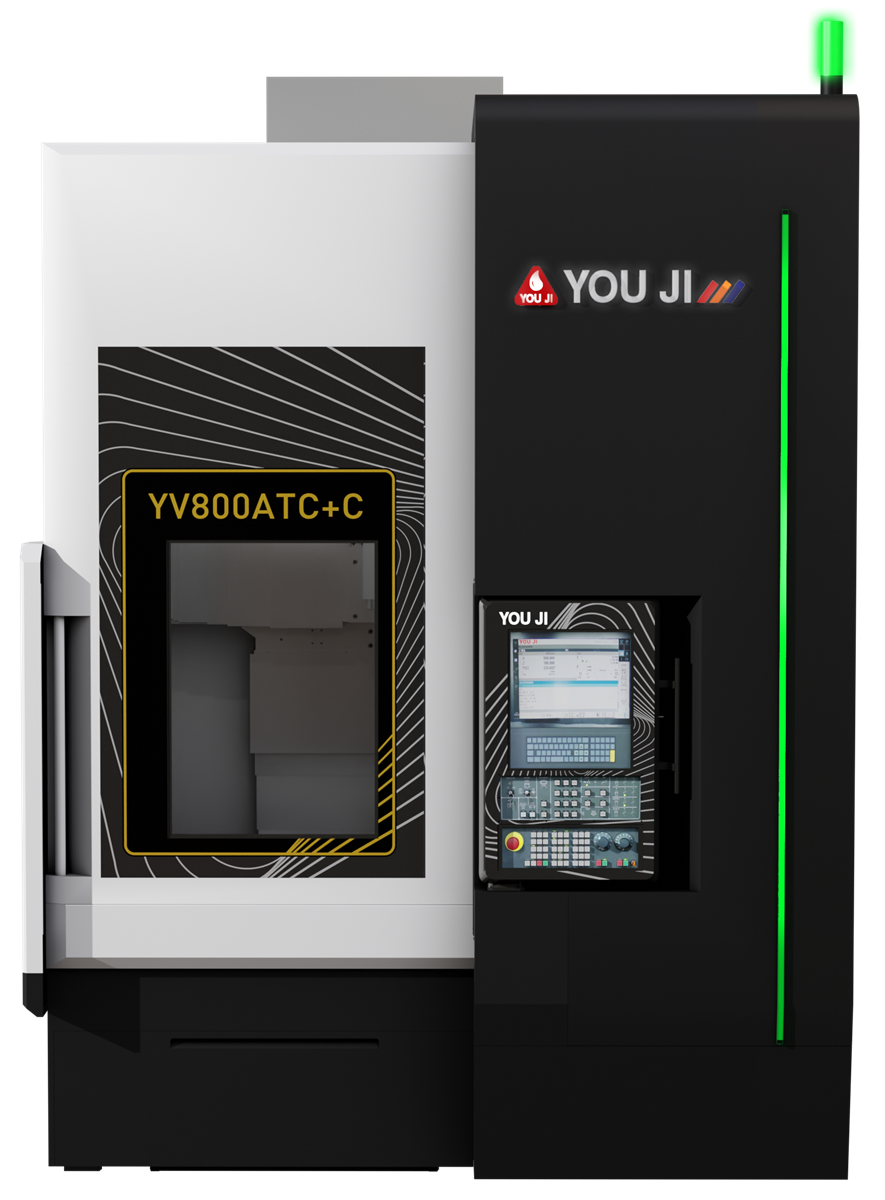
You Ji YV Series

Turret-Type Vertical Turning Centers

Vertical Lathes (VTLs)

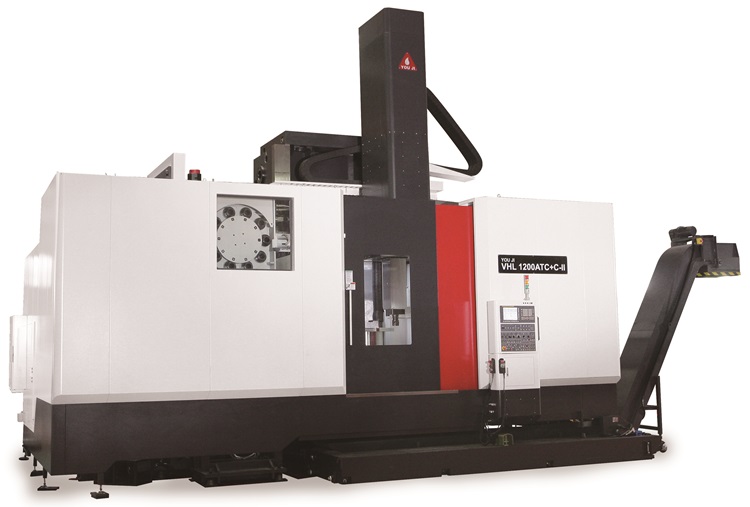
You Ji VHL Series

Vertical Lathes with Side Milling Head

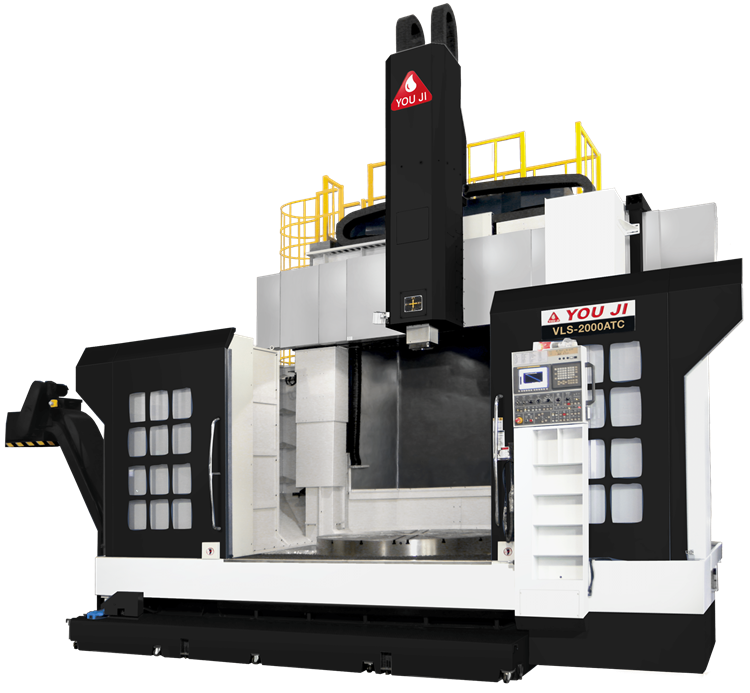
You Ji VLS Series

Vertical Lathes with 12-Tool ATC

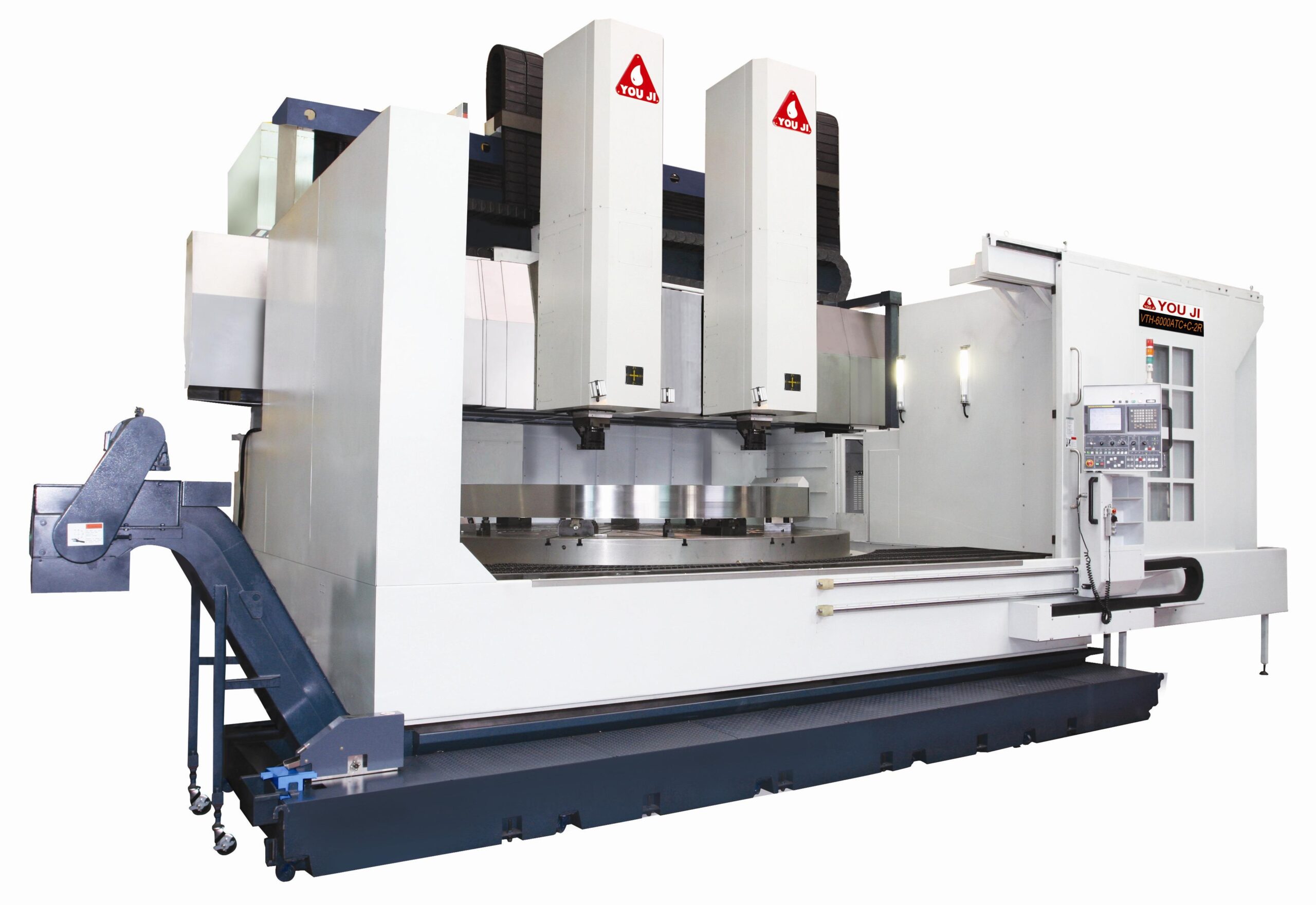
You Ji VTH Series

Vertical Lathes with Hydrostatic Table Bearing

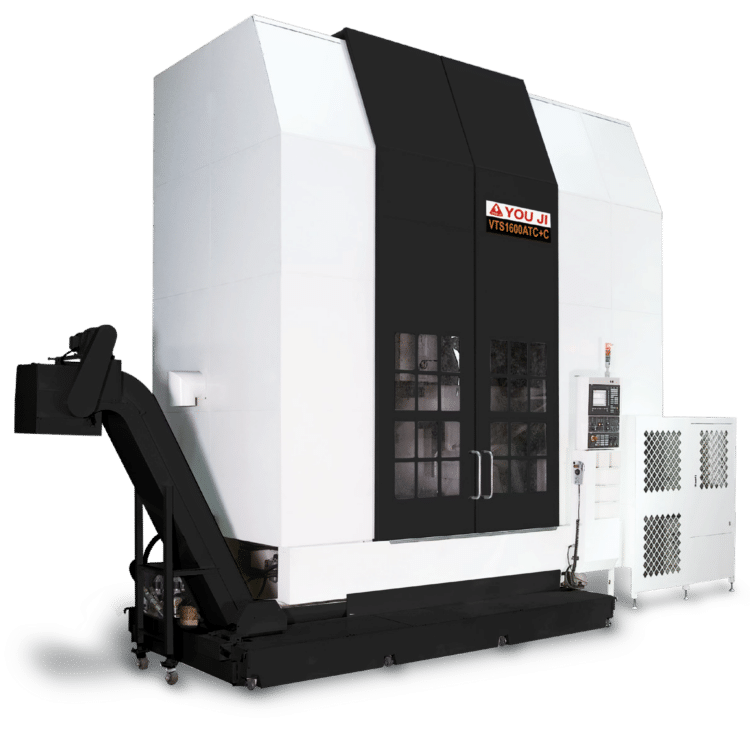
You Ji VTS Series

Vertical Turning Centers with Fixed Rail

You Ji YV/VTL Series

Ram-Type Vertical Turning Lathes & Vertical Turning Centers

You Ji VTL-2000

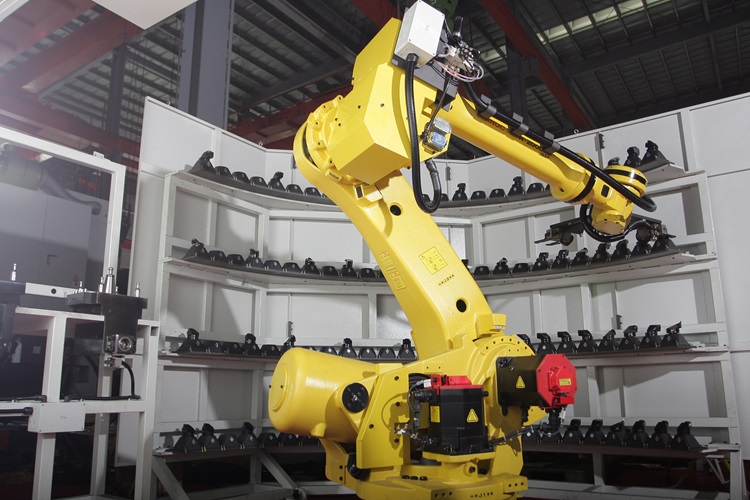
Vertical Lathe with 100 Station Capto Tool Magazine & Fanuc Robot

What Advantages Are There to Using Automation with These Machines?

Automation allows for strategic advantages such as continuous operations, unattended overnight or weekend runs, and automated loading/unloading of parts. Adding a robotic arm or gantry loader allows for faster performance and more accurate repeatability, less handling and manual labor, consistent loading and unloading, reduced downtime, part probing, and addresses skilled labor shortages, especially in high-mix, low volume environments. Another advantage that automation offers is that one operator can then manage multiple VTCs or VTLs at a time, allowing for less hourly costs per job and increased profitability.

The TERMS Vertical Turning Center and Vertical Lathe are often used interchangeably, but there are key differences. These machines may look similar and share some overlapping features, but serve different roles based on complexity, capability, and flexibility as they relate to different machining applications.

Vertical Turning Centers (Complex Multi-Axis Turning & Milling Use)

Vertical Lathes (High-Volume Simpler Turning Use)

CNC machine often fully enclosed and used for turning, milling, drilling, tapping and other advanced capabilities such as Y-axis and C-axis capabilities for full contouring.

CNC machine designed primarily for turning large heavy-duty workpieces.

Equipped with live tooling, automatic tool changers, C-axis for table rotation, and Y-axis for off-center milling and drilling.

Equipped with basic turning tools, turret-style tool changers, and optional attachments like grinding heads.

Used for complex parts that require multiple operations in a single setup, thereby reducing changeover time and increasing accuracy necessary for aerospace, energy, and defense applications.

Used for simpler or repetitive turning tasks especially when milling is not required, and common for industries machining flanges, rings, and brake drums.

Machine configuration is more advanced to support the demands of multi-axis machining.

Machine configuration is often single or dual column construction with a vertical ram for simpler setups.

For nearly 50 years, You Ji has been a world-renowned leader of large customized CNC machine tools. Most notable are their vertical turning center and vertical lathes, however, the company also has a diverse lineup of vertical machining centerstable-type and floor-type boring millsduplex machining centersbridge mills, travelling column drilling and tapping centersflat bed horizontal lathes, and horizontal turning centers.

Absolute has sold and installed thousands of You Ji vertical turning centers in the United States and around the world. Contact us today at sales@absolutemachinetools.com to learn more about our wide range of CNC lathes.

Frequently Asked Questions About Vertical Turning Centers & Lathes

A CNC vertical lathe takes the geometry of a normal lathe and stands it on end: the chuck faces upward and the part sits on a powered rotary table, while the cutting tools feed in from above on a cross-rail and ram. Turning it vertical is not a styling choice — with the workpiece lying flat, its own weight presses down into the table instead of trying to sag or fling itself off a horizontally cantilevered spindle, so shops can hold parts that would be unsafe or impossible to spin sideways. That is why vertical lathes (also called vertical boring mills, or VBMs) are the default for large, heavy, disc- and ring-shaped components. For smaller-diameter bar or shaft work, a horizontal turning center is usually the better fit.

Orientation should follow the part’s shape and mass. Vertical wins when the workpiece is large in diameter but relatively short — think discs, rings, hubs, gear blanks, and heavy castings — because gravity does the workholding and loading a 10,000-lb part onto a flat table is far simpler than clamping it into a horizontal chuck. Horizontal wins for long, slender shaft-type parts, where the length runs naturally between a chuck and tailstock and vertical travel would become impractical. A quick rule of thumb: if diameter is greater than length and the part is heavy, look vertical; if length dominates, look at horizontal turning centers.

They are built for large, symmetrical, and often heavy round parts across heavy industry. Common examples include flanges, bearing rings and races, gear and pinion blanks, brake drums and rotors, wheel hubs, valve and pump bodies, engine and compressor components, turbine and generator discs, wind-energy bearing rings, and large aerospace structural rings. In practice you see them anywhere a part is too big or too heavy to hold safely on a horizontal lathe. You Ji even offers a dedicated turret configuration (the WV series) aimed specifically at large aluminum wheels and similar production parts.

That is one of the main reasons to buy vertical — the size ceiling is high. Across the industry, heavy-duty VTLs routinely turn parts from roughly one meter up to 20 meters in diameter and handle payloads well into the tens of thousands of pounds, with the largest machines carrying loads over 100,000 lbs. Within Absolute’s You Ji range, chuck and table sizes scale from small production units up past 300 inches, with tall turning heights for oversized components, and the biggest jobs can be handled with fully customized machines engineered to a specific part. The right size is driven by three numbers: maximum swing (diameter), turning height, and table load rating.

The biggest enemy on big rings and thin-walled parts is vibration that builds on itself once the tool and workpiece settle into a shared resonant frequency. You Ji machines address this with Spindle Speed Variation, which keeps nudging the spindle rpm up and down slightly during the cut so that a steady, self-reinforcing chatter pattern never has time to establish — and it does this without forcing you to back off feeds and speeds, so finish improves without sacrificing cycle time. It is especially valuable in deep boring and on long or slender sections. For genuinely off-center or non-round geometry — cams, eccentrics, tapered profiles — the same machines can run Eccentric Turning, which is a related but distinct capability aimed at unbalanced parts rather than chatter.

A properly equipped vertical turning center does far more than turn. With live tooling, a C-axis to position or rotate the table, and an optional Y-axis for off-center work, it can mill flats and pockets, drill and tap hole patterns, and cut keyways — all referenced from the same setup that did the turning, which is what keeps features concentric and eliminates the stack-up error you get from re-fixturing on a second machine. For parts where milling and turning are equally heavy and continuous, it is worth also comparing dedicated mill-turn centers, which approach the same “done-in-one” goal from a turning-lathe starting point.

Start with the part envelope — maximum diameter (swing), turning height, and table load capacity — and leave headroom for the largest job you realistically expect, not just today’s average part. From there, weigh spindle power and torque (large-diameter roughing needs high torque at low rpm), whether you need live tooling and a C/Y-axis for milled features, tolerance and finish requirements, and how the part will be loaded, since a heavy part may call for a crane, pallet changer, or robot. Also factor floor space, available power, and lead time. On that last point, machines stocked domestically avoid import and tariff delays, which matters when a spindle-down situation is costing you production. If some features need more milling capability than a turning-focused machine offers, it is worth cross-shopping vertical mill-turn centers before committing.

There is no single figure, because “vertical lathe” spans everything from a compact production unit to a machine the size of a room. Small and used vertical lathes can be found from the tens of thousands of dollars, while new, heavy-duty CNC vertical turning lathes commonly run from around $250,000 to well over $500,000. What moves the price most is table and swing size, spindle power, the tooling package (a simple turret versus live tooling with a large automatic tool changer), and any automation. Because configuration drives cost so heavily, the most useful path is to price a machine against your actual part and volume rather than a catalog list price — Absolute can quote a You Ji configuration built to the specific job.

Absolute’s vertical turning line is built around You Ji, a builder with roughly 50 years focused on large, customized turning machines, and Absolute has installed thousands of them in the U.S. and worldwide. On the vertical turning center side the range includes the CTV series (ATC with CAPTO tooling), the CY series (automatic pallet changers), the VMT vertical mill-turn series, the WV series for large aluminum wheels, and the turret-type YV series. On the vertical lathe side it includes the VHL series with a side milling head, the VLS series with a 12-station tool changer, the VTH series with a hydrostatic table bearing for the largest components, the fixed-rail VTS series, and the ram-type YV/VTL machines — up to a VTL-2000 configured with a 100-station Capto magazine and a Fanuc robot. When a part falls outside the standard lineup, You Ji builds fully customized machines to spec.

It depends heavily on the machine class, and it is a fair question — a lot of the “vertical lathes are low precision” reputation comes from older manual vertical boring mills used to knock rough stock off large castings, where nobody was chasing tenths. A modern CNC vertical turning center is a different animal: rigid cast construction, closed-loop CNC control, and features like a hydrostatic table bearing (as on the You Ji VTH series) and Spindle Speed Variation let these machines hold tight tolerances and produce fine finishes on demanding aerospace, energy, and defense parts. The honest guidance is to match the machine to the tolerance — a simpler turning lathe is ideal for high-volume flanges and rings, while precision-critical, multi-feature parts belong on a fully featured turning center.

Yes, and it is one of the strongest arguments for buying new. Adding a robot arm or gantry loader lets a vertical lathe run automated load/unload, in-process part probing, and continuous or overnight cycles, which smooths out the labor problem most shops are facing and pushes more spindle hours out of the same footprint. The payoff scales when one operator oversees several machines at once, dropping the labor cost per part. Absolute integrates automation directly — including Fanuc-based cells like the VTL-2000 with a 100-station tool magazine and robot — so the loader, tooling, and machine are engineered to work as one system rather than bolted together after the fact.

REQUEST INFORMATION

This field is for validation purposes and should be left unchanged.
Name(Required)
Company(Required)