EDM Machines

CNC EDM Machines | Wire EDM, Die Sinkers & Hole Drilling

Precision Cutting Solutions for Every Electrical Discharge Machining Application

Absolute Machine Tools provides a complete range of EDM technologies engineered for accuracy, speed, and reliability in mold & die, aerospace, medical, and precision component manufacturing. Our product lineup includes CNC wire EDM, die sinker EDM, and EDM hole-drilling systems — each built by globally recognized OEMs and equipped with advanced technologies that deliver exceptional cutting performance, surface finish, and cost efficiency.

Benefits for Metal Cutting Manufacturers
  • Achieve micron-level accuracy and ultra-fine surface finishes for complex parts.
  • Machine hard materials such as titanium, Inconel, carbide, and hardened tool steels without distortion.
  • Reduce electrode wear and wire consumption through intelligent discharge and servo control.
  • Enhance productivity with automation-ready platforms and intuitive CNC interfaces.
  • Lower total cost of ownership with reliable, service-supported EDM solutions.

EDM Solutions

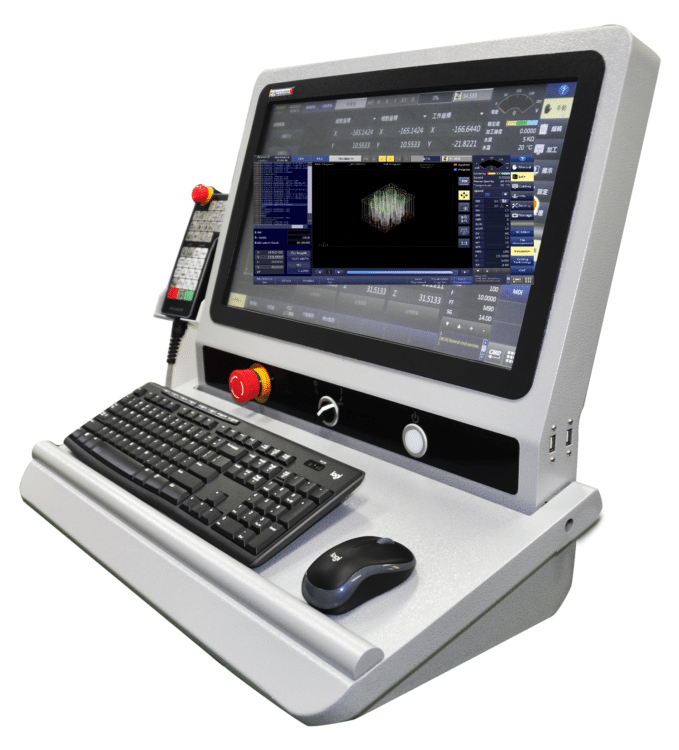
NEW Accutex ueX10 CNC Controller

Windows OS Designed with a “User Experience” Focus

AccuteX Die Sinker Series

CNC EDM Die Sinker Machines

Ocean Technologies River Series

Precision CNC and Manual Hole Drilling Machines

Automation Solutions Leading to Significant Cost Savings for our Customers

AccuteX CNC EDM machines come standard with the industry’s best and most reliable Automatic Wire Threader. How can we stake this claim? Because the best sources — none other than our customers — vouch for the reliability of the AccuteX’s patented annealing wire threader, benefiting from its efficient operations every single day. To get a sense of its outstanding output consider this: One gun manufacturer performs over 750 wire threads per day and another claims thousands of hours of unattended operations due to the reliability of the remarkable AccuteX’s patented wire threader.

Solutions from Absolute Machine Tools

Accutex CNC Wire EDM – Modern and Advanced Wire Cutting Technology

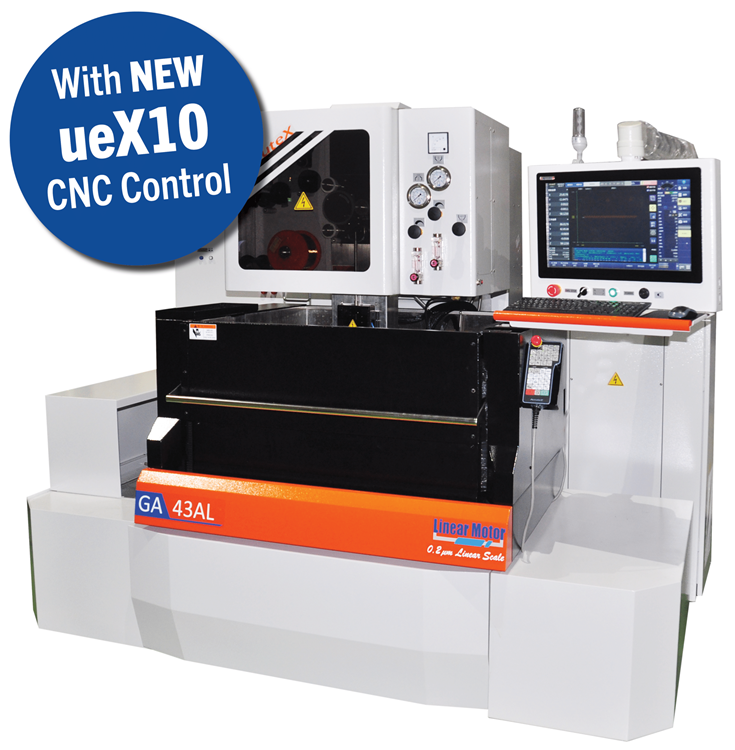
Accutex EDM machines deliver cutting-edge performance without the premium price tag. Equipped with the new UeX10 CNC control, these systems provide an intuitive Windows-based interface and a full suite of intelligent features such as motor torque monitoring, processing history library, faster simulation, and Delta CAD/CAM onboard (optional). The NexGen automatic wire threader (AWT) — recognized as one of the most reliable in the industry — ensures continuous cutting efficiency. Accutex wire EDMs offer precision, repeatability, and cost-effective operation for mold & die, aerospace, and precision component manufacturing.

The lineup includes the AZ Series, AP Series, GA Series, AU-iA Series and AU-i Flushing-Type Series.

Learn More About Accutex CNC Wire EDM Machines

Accutex CNC Die Sinkers – High-Precision Mold-Making Machining

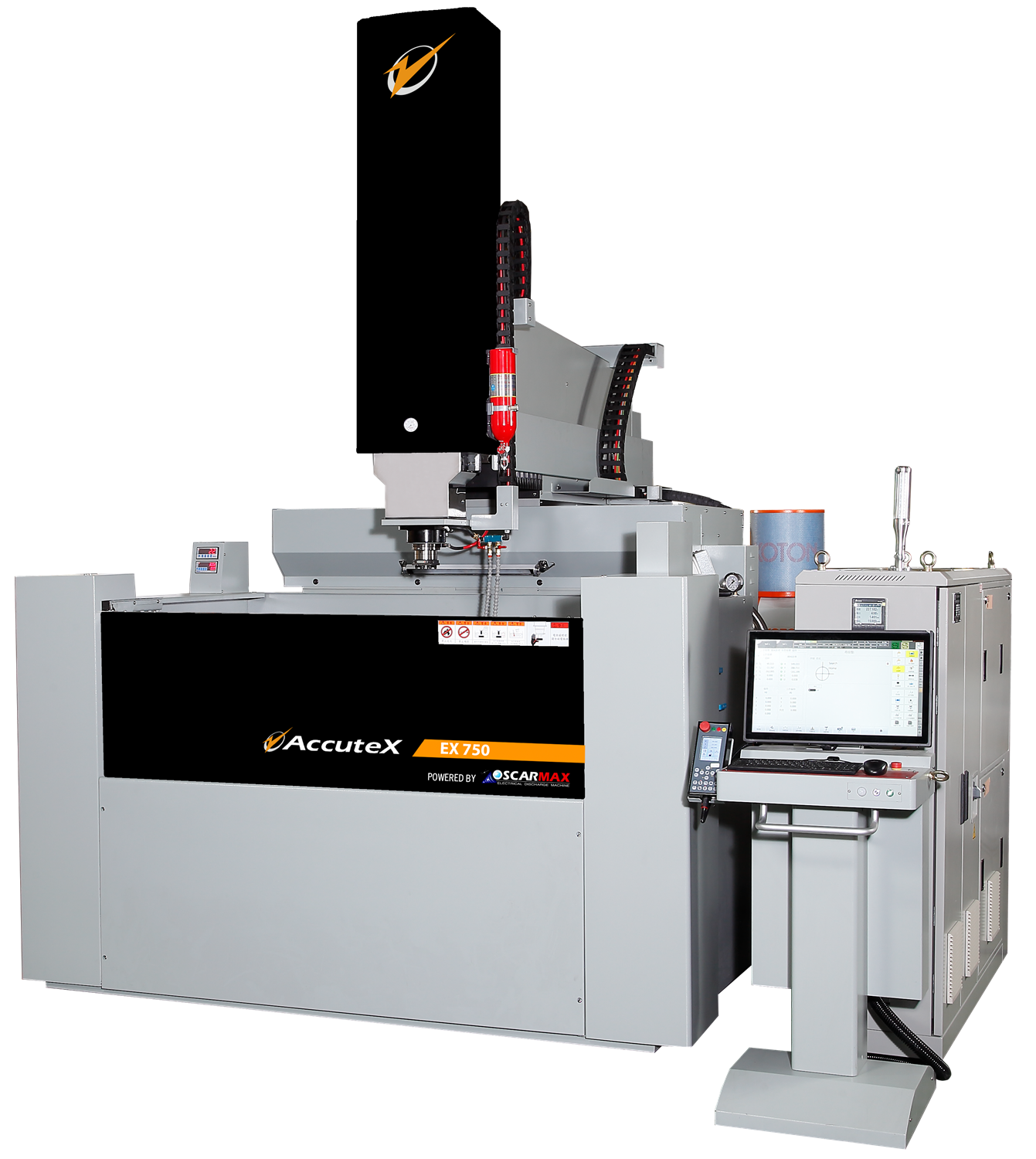
Designed for deep cavity machining and intricate detail work, Accutex CNC EDM die sinkers deliver exceptional performance for mold, aerospace, and medical manufacturers. CNC models feature multi-axis CNC control, 21.5″ touchscreen with movable controller, EtherCAT communication, and adaptive parameter control for precise energy management. For larger, more complex jobs, Accutex offers twin-head or extended-travel models. With advanced automation and superior electrode wear management, these machines produce consistent, high-quality parts while optimizing throughput and cost efficiency.

Models include the EX Series, NX Series, compact EX-600 and twin-head EX-2H Series.

Learn More About Accutex EDM Die Sinker Machines

Ocean Technologies River Series – Precision CNC and Manual Hole-Drilling EDM Machines

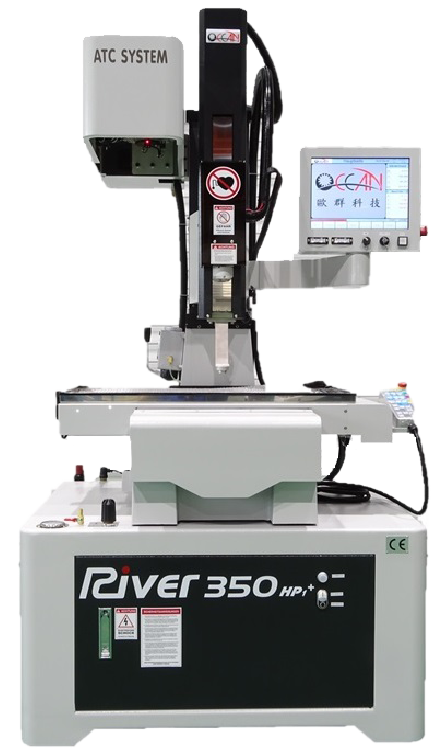
Ocean Technologies’ River EDM machines provide unmatched precision and speed for drilling small, high-tolerance holes in conductive materials. Engineered for aerospace, medical, and automotive applications, these machines feature tilting orbiting heads, multi-axis gantry-type CNC drilling, breakthrough detection, EDM milling, and electrode dressing capabilities. With a rigid, thermally stable structure and circuit discharge control that reduces electrode tube wear by up to 30%, River hole-drilling EDMs deliver superior accuracy, repeatability, and efficiency.

Choose from River ZNC models for wire-start and general drilling or River CNC models for multi-axis and angled-hole work, plus River submersible rotary tables.

Learn More About River EDM Hole Drilling Machines

EDM Machine FAQs: Wire, Die Sinker & Hole Drilling

Wire EDM — also called wire-cut EDM or, more broadly across all EDM types, spark erosion machining — cuts a programmed profile through solid, electrically conductive material, including hardened tool steel and super hard material such as tungsten carbide, without a cutting tool ever contacting the part. A thin traveling wire (typically brass) is held a few microns from the workpiece while both are submerged in deionized water; thousands of electrical pulses per second arc across that gap, vaporizing a tiny volume of metal with each spark while the water flushes the debris and carries away heat. Because there’s no mechanical force on the part, wire EDM holds tight geometry on thin walls, sharp internal corners, and pre-hardened components that would deflect or chip under a milling cutter.

All three erode metal with electrical discharges, but they solve different shop problems. Wire EDM threads a moving wire through the part to cut two-dimensional profiles and through-features — think gears, extrusion dies, and stamping punches. Die sinker EDM instead plunges a shaped graphite or copper electrode straight down into the material, which makes it the go-to process for blind cavities in hardened steel, such as a mold core or a deep rib pattern, since wire EDM can’t stop partway through a cut. EDM hole drilling uses a rotating tubular electrode to bore small, precise holes — often as a starter point for a wire EDM cut, or as the finished feature itself in parts like turbine blades. A mold shop building an injection tool will typically use all three in sequence: hole drilling for wire-entry points, wire EDM for the insert profile, and a sinker for any blind detail the wire can’t reach. See the full wire EDM lineup for machine-level specs.

Any material that conducts electricity is fair game, regardless of hardness — anything from aluminum to hardened D2 and A2 tool steel, titanium, tungsten carbide, Inconel and other nickel superalloys, and cobalt-chrome all cut at essentially the same rate they would in an annealed, soft state, because the process erodes material rather than shearing it. That’s a meaningful difference from milling or turning, where hardness and work-hardening alloys like Inconel drive up tool wear and cycle time. Plastics, ceramics, and other non-conductive materials can’t be processed on any of Absolute’s EDM platforms; those require laser or waterjet cutting instead.

A rough cut plus one skim pass typically holds about ±0.0005″ (±0.013 mm), with a surface finish in the 16-32 microinch Ra range. That’s enough for most production tooling. For die components and other precision work, more skim passes at lower power tighten tolerances to ±0.0001-0.0002″. Each pass also improves the finish, and mirror-like finishes around 4-5 microinches Ra can take six or seven skims. On AccuteX AP and AZ Series machines, the optional MST-II fine-finish upgrade reaches 4 microinches Ra (0.07 µm). The number of skim passes a part needs drives cycle time far more than the machine’s best-case spec. Before assuming every cut needs the tightest, lowest amperage setting, review your print tolerances with one of Absolute’s EDM applications engineers.

Mold and die shops are the heaviest users. Wire EDM cuts the hardened core and cavity inserts for injection molds and stamping dies after heat treatment, when the steel is too hard to mill economically. Aerospace shops lean on all three processes for turbine blade cooling holes, fuel nozzle passages, and landing gear components machined from Inconel and titanium. Medical manufacturers use wire EDM’s non-contact cutting for implant geometry and orthodontic hardware where surface integrity affects biocompatibility, and firearms and defense shops use it for hardened bolt and receiver features. Shops that also run mold and die machining centers for the roughing and pocketing work often hand the hardened detail features off to EDM as the finishing step.

Reach for wire EDM when the print calls for tolerances tighter than about ±0.001″ or when the part is already hardened — waterjet realistically holds around ±0.005″, and laser cutting introduces a heat-affected zone that wire EDM avoids entirely. Waterjet and laser both win on raw cutting speed for thinner, softer, non-critical stock, so a shop cutting mild steel brackets to loose tolerances is usually better served by one of those processes than by tying up an EDM. The deciding question is rarely “which machine is more precise” — it’s whether the part’s hardness or tolerance actually requires that precision, since EDM’s slower material removal rate makes it the wrong tool for high-volume, loose-tolerance cutting. In some cases, cost of operation can also come into play. The wire EDM can run for days untended at a cost as low as $5 per hour.

Starter holes are the most common use. A rotating tube electrode bores an entry point in thick or hardened stock so the wire can be threaded through before the profile cut begins. But hole-drilling EDM is also a finished-feature process in its own right for holes that are too small, too deep, or at too steep an angle for conventional drilling: turbine blade and fuel nozzle cooling passages as small as a few thousandths of an inch in diameter, deep venting holes in mold cores, and angled holes in hardened dies. Ocean Technologies’ River Series machines drill diameters from 0.1 mm up to 3.0 mm through stainless steel, carbide, titanium, and superalloys, which covers both the starter-hole and finished-hole use cases on one platform. See the full EDM hole drilling lineup for size ranges by model.

Start with your part envelope and material, not the spec sheet. Tank size and X/Y/Z travels need to clear your largest workpiece, and if you’re cutting carbide or thick hardened stock regularly, generator power and flushing capability matter more than top-end cutting speed on thin material. Submerged-tank machines (versus jet-flush designs) hold tighter accuracy on tall or thick parts because the dielectric surrounds the entire cut zone rather than just the nozzle area, which matters for mold inserts and aerospace details. Automatic wire threading is worth prioritizing if you run unattended shifts: a threader that reliably restrings the wire after a break is the difference between a machine that runs overnight and one an operator has to babysit. AccuteX’s NexGen annealing wire threader is built specifically around that reliability question — one AccuteX customer in gun manufacturing runs over 750 automatic wire threads a day without operator intervention.

Wire is usually the single largest recurring cost of running a wire EDM, not electricity or the machine’s depreciation — wire feeds continuously through every rough cut and skim pass, so shops cutting thick or hard material with multiple skims go through it quickly, and coated or zinc-diffused wire that cuts 10-15% faster costs more per spool than plain brass. On the capital side, machine price scales mainly with tank size, generator power, axis count, and automation: automatic wire threading, submerged-tank construction, and multi-axis (taper-cutting) capability all add cost over a basic 2-axis jet-flush unit. For shops estimating a new EDM purchase, it’s worth budgeting wire and dielectric consumables as an ongoing line item rather than treating the machine price as the full cost of ownership. As a reference, the AZ-600A’s standard wire spool is 35 lbs. At 1/2 lb. per hour, the machine can run 70 hours untended at a wire cost of $2.75 per hour — by far the highest consumable cost of running a wire EDM.

Absolute imports and distributes AccuteX wire EDM and die sinker machines and Ocean Technologies hole-drilling EDMs. AccuteX wire EDMs run the ueX10 CNC control, a Windows-based interface with onboard CAD/CAM, motor torque monitoring, and the NexGen annealing automatic wire threader. The GA Series has a working tank that fills to 8.46″ for fully submerged cutting. The largest wire EDM platform is the AU-1400iA+Z800, which carries travels of X 55″ x Y 31.5″ x Z 31.5″. AccuteX die sinkers add 4-axis (X/Y/Z/C) CNC control, expandable to 6 axes with an optional rotary table, plus a 21.5″ movable touchscreen and EtherCAT communication for reliable high speed feedback and communication through all systems. Ocean Technologies’ River Series drills small holes from 0.1-3.0 mm and includes breakthrough detection. Beyond the equipment, Absolute’s in-house EDM applications team runs test cuts and time studies on your actual parts before purchase and provides free lifetime training, which matters more on EDM than on most machine tools since parameter tuning has a real learning curve. For hands-on programming and setup advice from Absolute’s EDM technical director, see our wire EDM and EDM drilling questions page.


Upgrade Your EDM Machining Capabilities Today

At Absolute Machine Tools, we provide more than EDM machines — we deliver complete EDM solutions. Our dedicated team of in-house EDM technical experts, applications engineers, and seasoned service technicians support every customer with test cuts, time studies, and free lifetime training, ensuring long-term precision, productivity, and performance. Read our EDM technical director’s answers to common wire EDM and EDM drilling questions.

REQUEST INFORMATION

This field is for validation purposes and should be left unchanged.
Name(Required)
Company(Required)