VTL Lathes

Heavy-Duty CNC VTL Machines & VTL Lathes for Large-Part Turning

As part of our commitment to providing the highest quality CNC vertical lathes to our customers, Absolute Machine Tools offers a full line of high performance, heavy duty You Ji VTL lathes.

You Ji is one of the world’s leading builders of large custom CNC vertical lathes. Exceptional engineering capabilities and accuracy make You Ji VTL lathes ideal for a wide range of CNC machining applications, especially projects that involve:

  • Large and heavy work pieces that require a crane or automation
  • Complex work pieces
  • Unbalanced or odd shaped work pieces requiring complex fixturing
  • Work pieces requiring interrupted cuts
  • Fragile work pieces that necessitate low clamping pressures

Machines

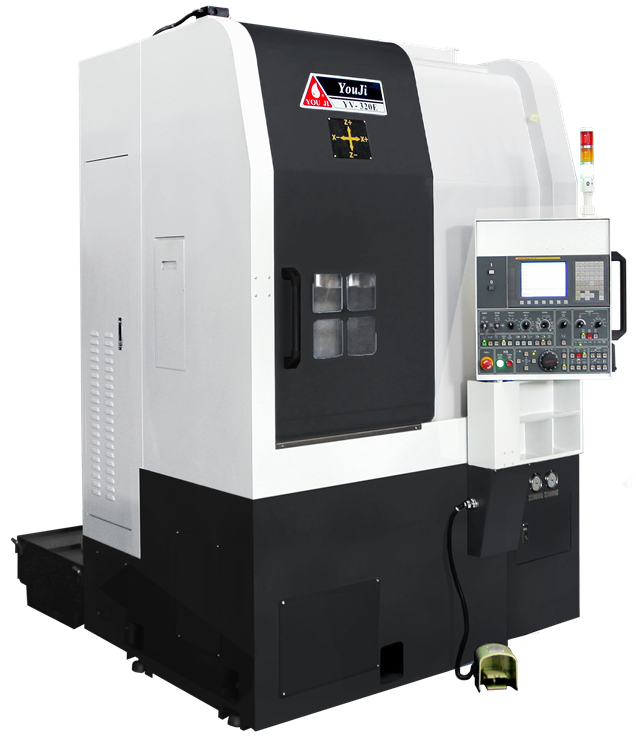
You Ji YV Series

Vertical Turret/ATC Turning Centers

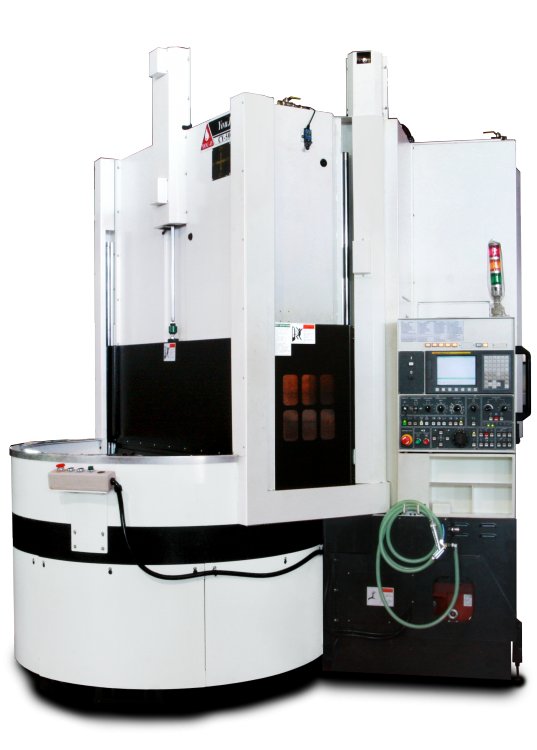
You Ji CY-550H+APC Vertical Turning Center

Vertical Lathes with Automatic Pallet Changers

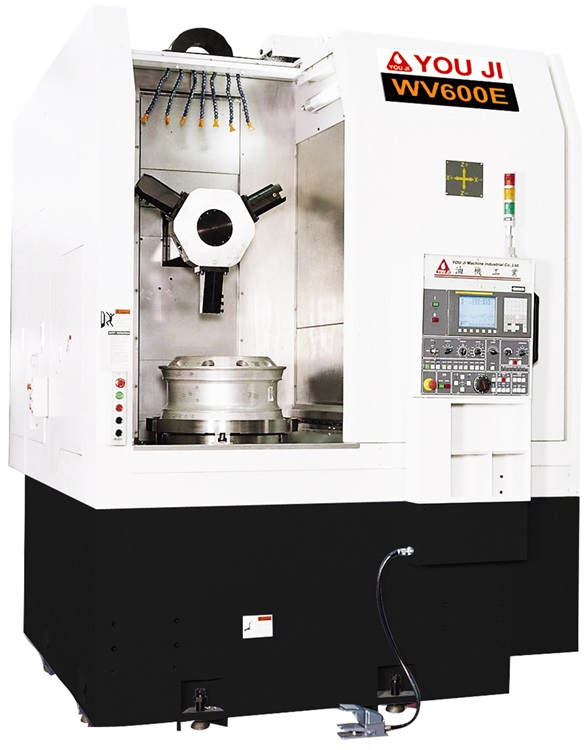
You Ji WV Series

Wheel Turning

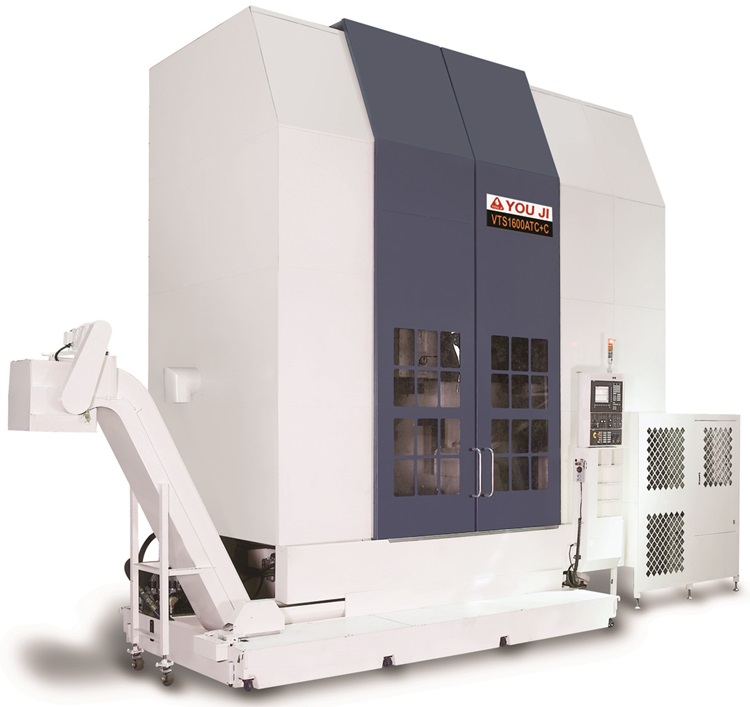
You Ji VTS Series

Vertical Fixed-Rail Turning Centers (bearings production)

You Ji YV/VTL Series

Vertical Ram-Type Lathes

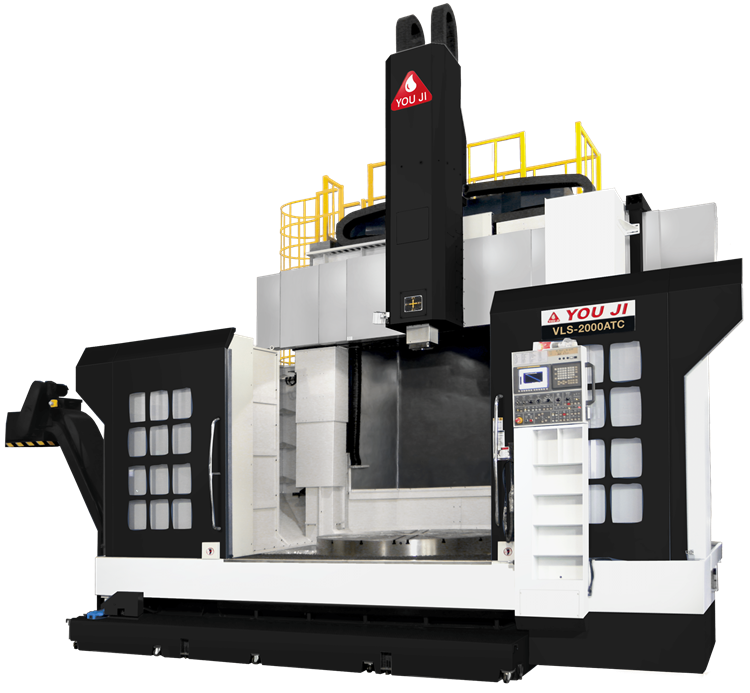
You Ji VLS Series

Vertical Turning Lathes with 12 Station Tool Changer

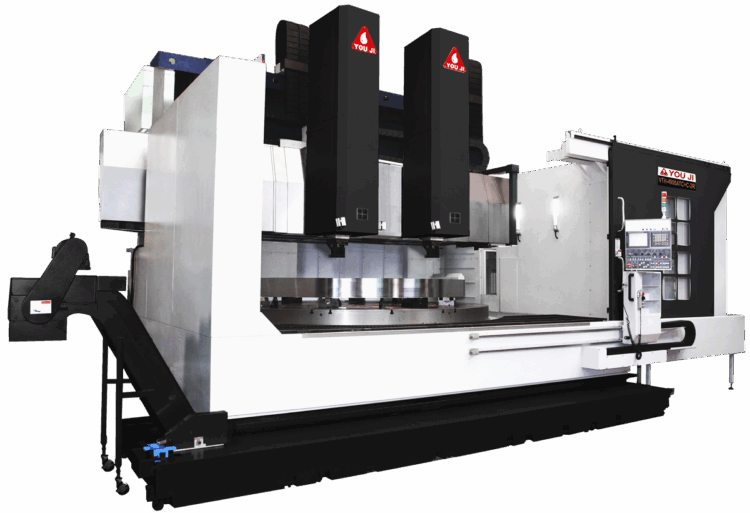
You Ji VTH Series

Hydrostatic Bearing

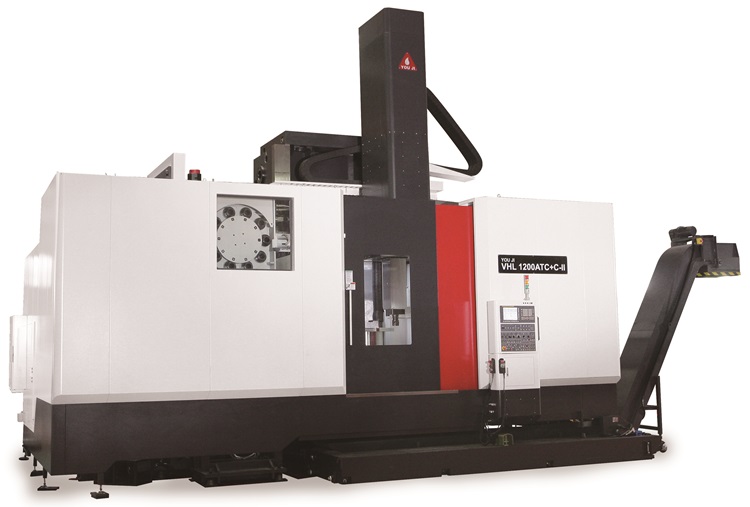
You Ji VHL Aircraft Series

Vertical Turning Centers with Side Head

Vertical Lathe Features

A CNC vertical lathe is a turning machine in which the worktable is parallel to the ground. This design provides many advantages for machining precision parts. For one thing, VTL lathes use the force of gravity to help secure and stabilize the work piece. The weight of the workpiece is directed straight down into the machine foundation and produces no off-axis loads on the spindle.

This arrangement minimizes the effect of interrupted cuts compared to horizontal lathes while facilitating part handling and increasing the amount of weight the machine can handle, making VTL lathes an excellent choice for large work pieces.

In addition, this vertical alignment also makes fixturing easier and reduces the amount of clamping pressure needed – great for thin and fragile pieces.

CNC vertical lathe features include:

  • Chuck capacities extending from 8″ to 315″
  • Inverted spindles
  • Timken cross-roller high quality bearings to ensure rigidity and accuracy
  • Fixed or moveable-rail style machines with side heads
  • Single or dual RAM
  • Integrated pallet changers
  • 3 – 5 axis mill-turn

Available options include a variety of tool changers and Y-axes, along with specialized machines for the production of wheels, bearings and aerospace parts.

Absolute Machine Tools has sold, installed and serviced more than 2,000 You Ji VTL lathes in the United States and around the world. Contact us today at sales@absolutemachinetools.com to learn more

Frequently Asked Questions About VTL Lathes

A CNC vertical lathe — also called a VTL, vertical turret lathe, or vertical boring mill — rotates the workpiece on a round table that sits flat, parallel to the floor, while a ram or turret feeds tooling down into it from above. A standard horizontal CNC lathe does the opposite: the part is gripped in a chuck on a horizontal spindle and hangs out over the bed.

That change in orientation is what matters on the floor. On a VTL, the part’s weight passes straight down through the table bearing into the machine base instead of cantilevering off the spindle, so large-diameter work stays supported and holds roundness rather than sagging or pulling the setup out of tolerance. Gravity helps seat and center the part during loading, and chips fall away from the cutting zone instead of collecting in it. The same gravity-assisted setup also makes loading easier and safer on the operator, even on smaller parts that could go on either machine, since squaring a part on a flat table beats centering it in chuck jaws at eye level. 

A horizontal lathe is still the more efficient tool for shafts and other length-dominant work; once a part’s diameter starts to outrun its length or its weight gets difficult to hold in jaws, a VTL becomes the more practical choice.

A horizontal lathe holds a workpiece in chuck jaws that cantilever off the spindle nose, so as parts get larger and heavier, that overhung mass works against the spindle bearings and the finish they can hold. Stand the same operation up vertically and gravity does the opposite job: the part’s mass presses into a broad, supported table instead of pulling sideways on a spindle, so heavy or unbalanced castings sit more stably through the cut. Splined shafts, keyed hubs, and cored castings — anything with an interrupted cut — also tend to machine more consistently on a vertical spindle, since the tool isn’t loading and unloading against a part that’s already flexing under its own overhung weight. Shops that already run horizontal turning centers for bar work and long shafts often add a VTL specifically to cover the large-diameter, short-length parts a horizontal chucker isn’t built to hold securely.

The answer comes down to the part on your floor, not the label on the machine. A VTL is a ram-type machine built for large-diameter, high-mass turning. The ram’s rigidity is what lets it hold tolerance through deep cuts on heavy rings, flanges, housings, and forgings. A vertical turning center is a more compact platform sized for smaller parts and shorter cycles, usually with C-axis and live tooling so milling, drilling, and tapping happen in the same clamping as the turning.

The deciding factors are swing diameter, part weight, and depth of cut. If the part exceeds compact-platform capacity or needs ram rigidity to finish, it belongs on a VTL — and both run production work. The difference is the size of the part, not the size of the batch. For the compact end of the lineup, see vertical turning centers.

VTLs earn their keep on parts where diameter dominates length and where handling the workpiece safely matters as much as machining it accurately. Typical work includes turbine rotors and generator components for power generation, brake rotors and wheel hubs for heavy trucks and construction equipment, landing gear components and engine casings for aerospace, and large gear blanks or pump housings for industrial equipment builders. The appeal isn’t only accuracy, it’s that a crane or robot can set a multi-ton casting flat on a table far more safely than trying to chuck it horizontally. Absolute’s You Ji VTH and VHL series, for example, are built specifically around large-casting and aerospace work where side-head access and hydrostatic bearings matter more than raw cycle speed.

Chuck and table sizes on production VTLs span an unusually wide range, since the category covers everything from mid-size job shop work up to shipyard-scale castings. Absolute’s You Ji lineup runs from an 8″ chuck up through 315″, with turning heights reaching 20 feet on the largest ram-type configurations. Because that range is so broad, the right size for a given shop comes down to matching table diameter and Z-travel to the largest part in the actual production mix — not the biggest job that might show up someday.

Yes. Most modern VTLs go well beyond pure turning. Adding a C-axis lets the table index to any angular position, so a driven tool can drill or tap a bolt pattern without the part ever leaving the machine, and a Y-axis lets that same tool cut off-center slots, flats, or pockets instead of only features on the centerline. Add a B-axis (tilting) milling head on top of that and the turret effectively becomes a multi-axis machining center, capable of finishing faces and features that would otherwise require moving the part to a mill entirely. When a shop’s parts need substantially more milling than turning, it’s often more efficient to look at a dedicated vertical mill-turn machine built around milling first.

Start with the part, not the machine. Table diameter and swing need headroom above your largest current job, not just today’s average part, and turning height matters as much as diameter for tall castings or stacked tooling. From there, weigh how much of the work is pure turning versus how much would benefit from live tooling, Y-axis, or a B-axis milling head, since adding those capabilities later is far more expensive than specifying them up front. Spindle horsepower and table drive torque both deserve scrutiny, too: a machine with a high-horsepower motor but a weak table drive will bog down on heavy roughing passes even if the spec sheet looks impressive. Finally, plan workholding and automation alongside the machine itself — parts heavy enough to need a VTL usually need a crane, gantry, or robot to load them.

The distinction comes down to part geometry and production volume. A VTL is the right call for large-diameter, high-mass parts — castings, forgings, or fabrications — where turning is the main operation and any milling is secondary, such as a few bolt holes or a flange face. A mill-turn center makes more sense when a smaller, more geometrically complex part needs heavy milling, sub-spindle operations, or high-mix production where finishing a part in one setup eliminates several separate machine moves. Forcing a highly complex, milling-intensive part onto a VTL usually means fighting the machine’s turret or ram configuration; forcing a multi-ton casting onto a mill-turn center usually means the part won’t fit the machine’s turning envelope in the first place.

Table diameter and maximum swing are the biggest cost drivers on a VTL, since a larger table means a heavier casting, wider ways, and a bigger spindle motor to match. Beyond size, control brand, spindle horsepower, and whether the machine includes live tooling, C-axis, or Y-axis all move the price meaningfully, as does automation such as pallet changers or robot/crane-loaded workholding. New CNC vertical lathes commonly range from around $20,000 for smaller machines into six figures for large, heavily optioned production machines. Well-maintained used machines typically run 30-60% below new-machine pricing, though buyers should budget for rebuild costs on ways, spindle bearings, or a turret if the machine has seen heavy use.

Absolute Machine Tools carries You Ji, one of the world’s leading builders of large custom vertical turning lathes, with a relationship spanning more than 25 years. In that time, Absolute has put more than 2,000 of these machines to work in shops across the U.S. and internationally, backing them with parts support and service rather than just selling them and moving on. The lineup covers a range of configurations for different jobs: the YV Series for turret/ATC turning, the VLS Series with a 12-station tool changer for higher-mix production, the VTH Series with hydrostatic bearings for the largest and heaviest parts, the VHL Series with a side head built for aerospace components, and the WV and VTS Series purpose-built for wheel and bearing production. Because You Ji can build to custom specifications rather than just a fixed catalog, Absolute can also help modify a configuration — a second ram, a pallet changer, a specific side-head arrangement — to fit a shop’s exact part mix.

Videos

REQUEST INFORMATION