

Bridge Mills
Bridge Mills – Large-Scale Precision and Power for Heavy-Duty and Aerospace 5-Axis Machining
Bridge mills — also known as bridge-type or double-column machining centers — are engineered for exceptional rigidity, accuracy, and stability when machining large and complex components. Their design isolates the spindle from the table, maintaining precise alignment across long travels and eliminating vibration even under heavy cutting loads.
From aerospace structural components to heavy-duty mold, die, and energy industry parts, bridge mills deliver the large working envelopes, superior force flow, and multi-axis versatility that today’s manufacturers demand.
Benefits for Metal Cutting Manufacturers
Machines
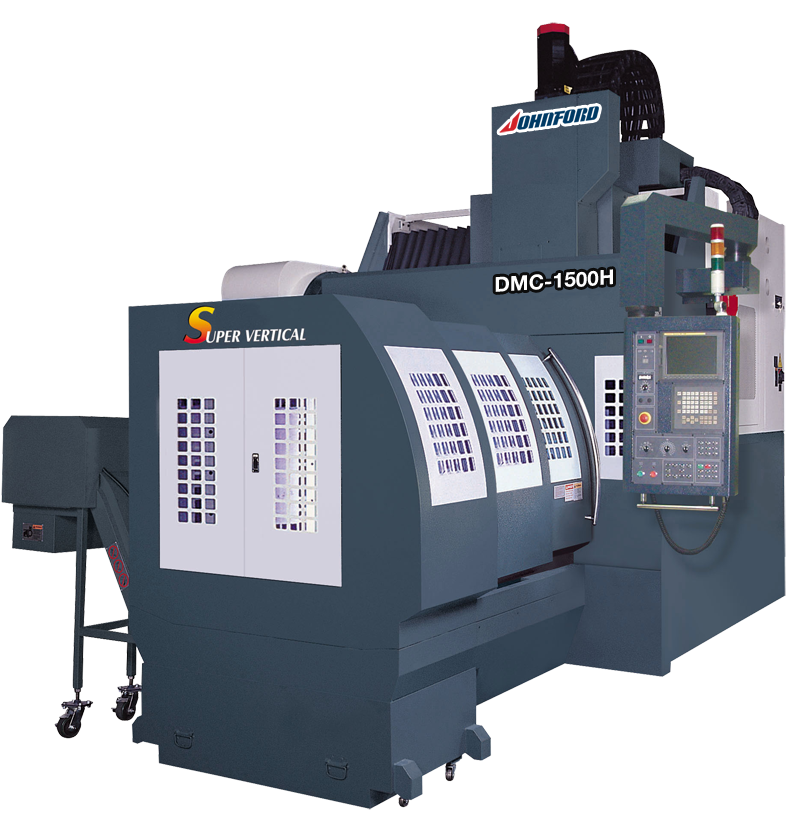
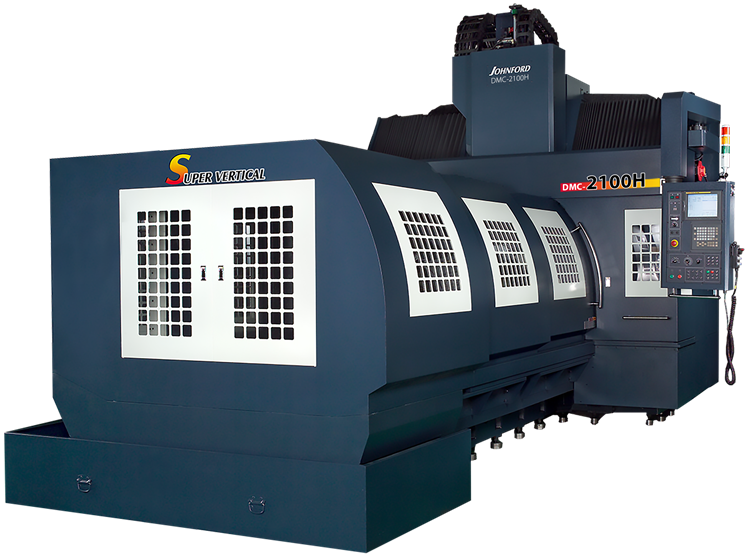
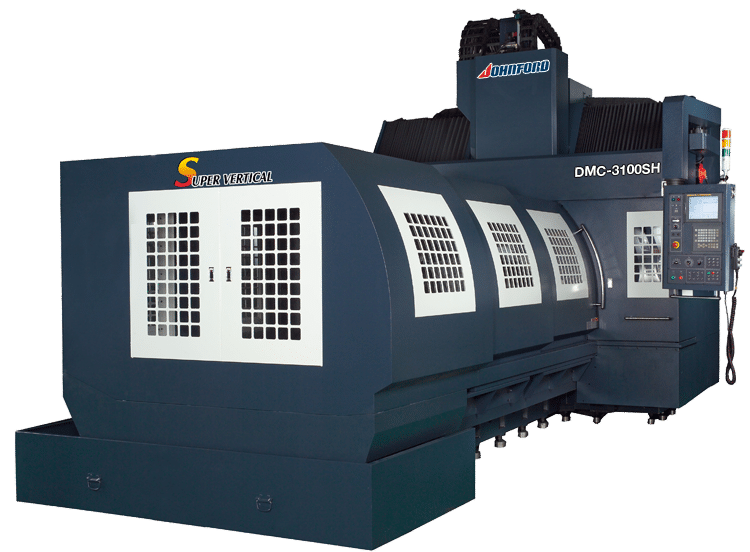
Moving Table Bridge Mills 2100mm – 6100mm with 1780mm (70″) Extended Y-Axis Travel
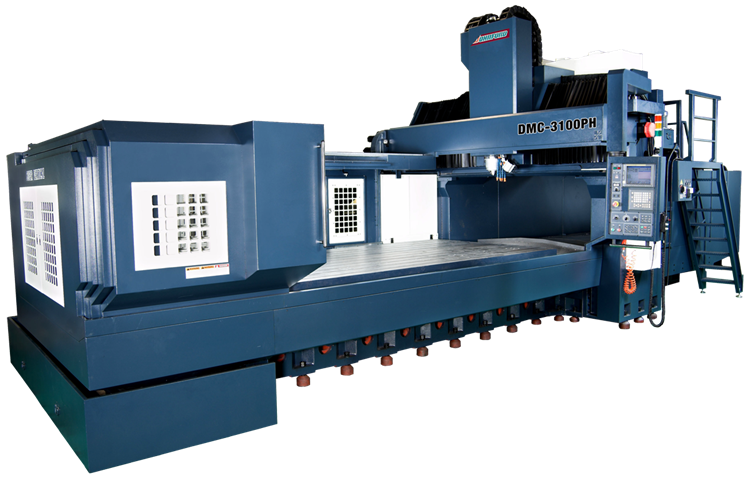
Moving Table Bridge Mills 3100mm – 6100mm with 2300mm (90.5″) Extended Y-Axis Travel
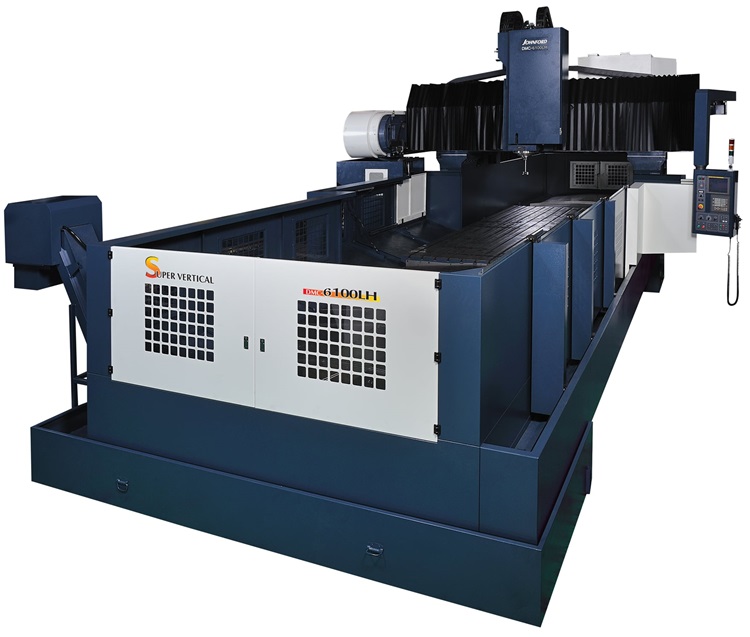
Moving Table Bridge Mills 3100mm – 6100mm with 2800mm (110.2″) Extended Y-Axis Travel
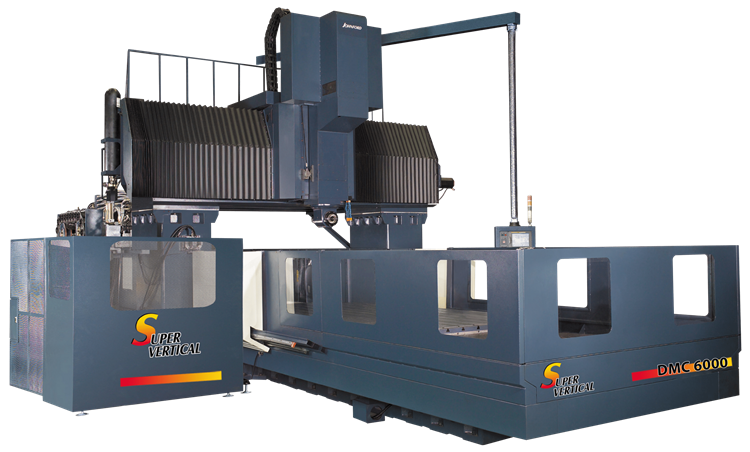
Johnford Massive Fixed or Moving Table/Fixed Column Bridge Mills
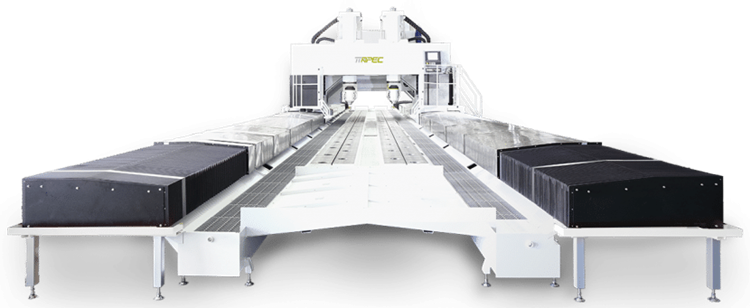
Moving Table Bridge Mills 5-Sided/5-Axis Spindles W-Axis 4000mm – 6000mm
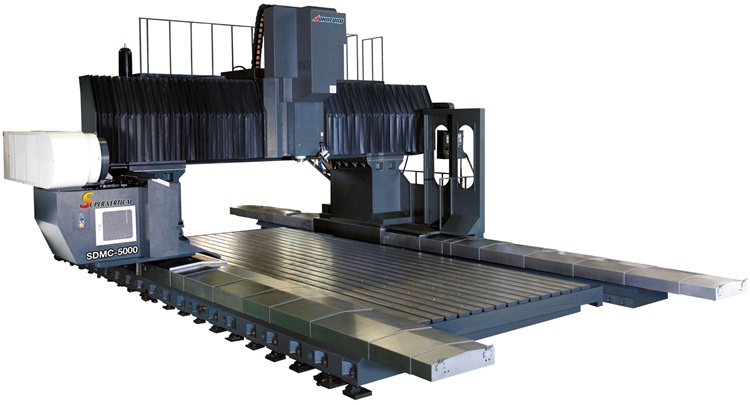
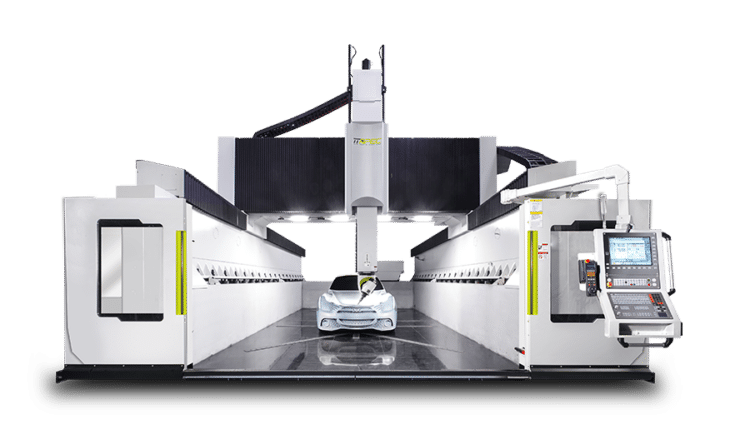
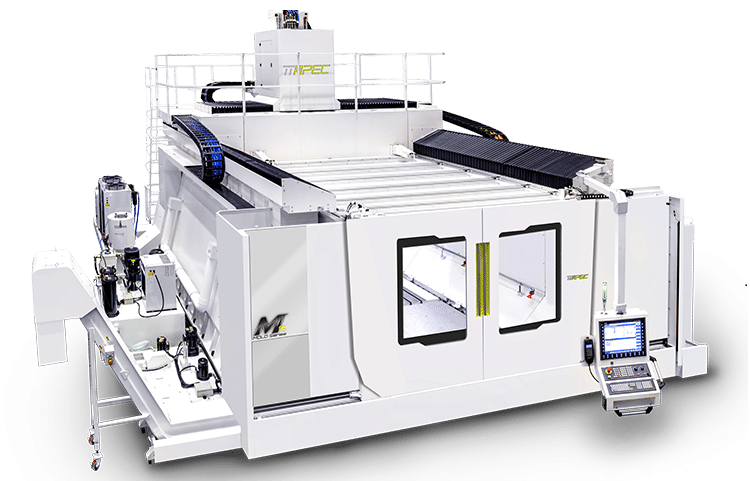
5-Axis Large Format High Speed Gantry Machining Centers for Aerospace & Injection Molds
Solutions from Absolute Machine Tools
Johnford Bridge Mills
Johnford bridge mills are globally recognized for their massive Meehanite cast-iron structures, precision craftsmanship, and unmatched durability in both heavy-duty and precision machining applications.
APEC Bridge Mills
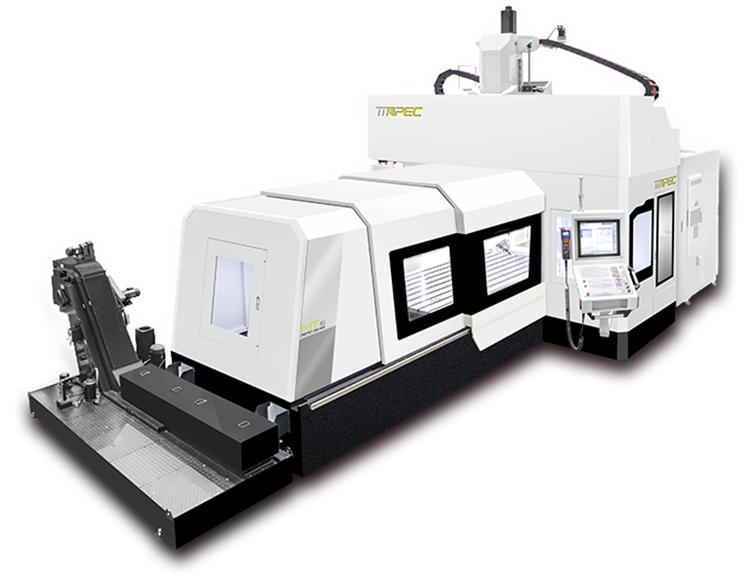
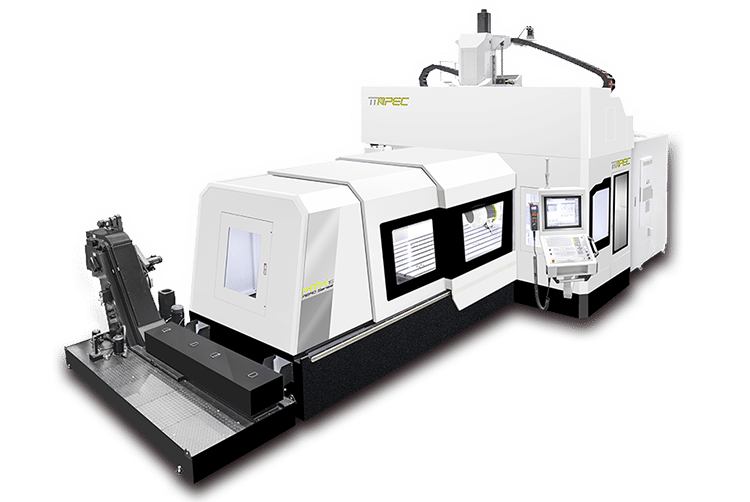
APEC (Asia Pacific Elite Corp.) applies advanced force-flow design principles across its U-Shape and Box-in-Box structures to guide cutting forces along the shortest, most stable path into the base. This ensures high-speed accuracy, long-term rigidity, and thermal stability across all models.
Ready to take your large-part machining to the next level?
At Absolute Machine Tools, we combine cost-effective engineered solutions with the industry’s most advanced bridge mill technology from Johnford and APEC. Our applications engineers are ready to help you configure the right machine, spindle, and pallet-changing system to meet your production goals. Contact Absolute today to discuss your next aerospace, mold, or heavy-component machining project — and discover why we’re North America’s trusted source for bridge mill solutions from print to part.
Applications & Industries that Commonly Use Bridge Mills
Bridge mills transcend limitations, making them a coveted asset for various industries. Their ability to handle large workpieces with exceptional precision unlocks a world of possibilities. Here’s a glimpse into how bridge mills empower different sectors:
- Precisely machining large airframe components: Fuselage panels, landing gear parts, and engine housings require tight tolerances and superior strength. Bridge mills deliver the accuracy and rigidity needed for these critical aerospace parts.
- Manufacturing complex wing structures: Bridge mills tackle the intricate geometries of modern wing designs, ensuring smooth airflow and optimal performance.
- Handling large engine blocks and cylinder heads: The robust construction of bridge mills allows them to efficiently machine these massive engine components with the precision needed for high-performance vehicles.
- Creating large molds and dies: Bridge mills are instrumental in automotive production, enabling the creation of large molds and dies for stamping body panels and other vehicle parts.
- Machining complex mold geometries: Bridge mills conquer the challenges of intricate mold designs, allowing for precise machining of cavities, cores, and other features essential for high-quality parts production.
- Handling large mold bases: The expansive work envelope of bridge mills accommodates oversized mold bases, providing the stability and machining reach needed for large-scale molds.
- Machining turbine blades: Bridge mills contribute to reliable energy generation by precisely machining complex turbine blades for power plants.
- Manufacturing large generator components: The ability to handle large workpieces makes bridge mills ideal for machining generator housings, rotors, and other vital components.
Heavy Equipment Manufacturing:
- Efficiently machining large construction equipment parts: Bridge mills tackle the heavy-duty demands of this industry, efficiently machining components like crane booms, excavator arms, and bulldozer blades.
- Manufacturing large parts for mining machinery: Bridge mills contribute to efficient mining operations by precisely machining parts for haul trucks, excavators, and other large mining equipment.
The exceptional capabilities of bridge mills make them a valuable asset for companies seeking to:
- Machine large and complex workpieces with superior precision.
- Increase production efficiency and throughput.
- Achieve tight tolerances and ensure dimensional accuracy.
Bridge Mill vs. Vertical Machining Centers (VMC):
- Work Envelope: Bridge mills excel at handling large workpieces due to full support of the table through the entire X axis travel and their extended Y-axis travel. VMCs, or C-frames, have a more limited work envelope due to the single column and compound table design with the table not being fully supported (overhang).
- Rigidity: The bridge structure of bridge mills provides exceptional rigidity and accuracy, minimizing deflection during heavy-duty machining. VMCs experience more deflection with larger workpieces and have lower table load capacity.
- Accessibility: The ergonomic design of bridge mills grants easier access to the worktable from all sides, simplifying part loading/unloading and tool changes. VMCs have limitations in accessibility because of the table moving in the Y axis.
Bridge Mill vs. Double Column Machining Center (DMC):
The term “double column” is synonymous with “bridge mill.” Both offer the benefits of a large work envelope, high rigidity, and improved accessibility. It’s important to note that the bridge structure itself can vary depending on the size and capacity of the machine. For example, Johnford DMC series mostly features models with one-piece column and bridge castings.
Bridge Mill vs. Vertical Turning Machine (VTL):
These machines serve different purposes:
- Bridge Mills: Ideal for milling complex 3D geometries on workpieces of various shapes and sizes.
- VTLs: Primarily used for turning large cylindrical workpieces. They rotate the workpiece on a horizontal axis while the cutting tool moves along various programmed paths.
Bridge Mill vs. Gantry Mill:
Bridge mills or double column machining centers are often used interchangeably with gantry mills. Both refer to CNC machines with lengthy tables and a bridge-like structure, also called a gantry, that supports the spindle assembly, enabling machining across a wide work envelope. However, they differ in movement. Bridge mill tables move back and forth under the fixed gantry (or bridge), while gantry mills allow the gantry (bridge) and columns to move over and across the top of the fixed table. Gantry mills are also known as sliding double column machining centers because the gantry slides on either box ways or linear rails over the top of the fixed table. (This is instead of the two paragraphs below.
While both bridge and gantry mills are used to machine parts in similar industries, the differences lay in the construction of the machines. Bridge mill construction typically uses box ways and geared heads and are best used for industrial manufacturing requiring heavy part machining in industries such as automotive, energy, construction, industrial, shipbuilding, military and defense, railway and transportation, and tool and die making. Gantry mill construction typically employs linear ways and motors and are best used in industries such as aerospace, automotive and mold design where super fine finishes are required. Both types of machines can cut virtually any type of metal, so it depends upon the design, specifications, and application of the project at hand to determine which machine would be the best choice.
Maintenance and Support for CNC Bridge Mills
Just like a car, a bridge mill is a substantial investment, so practicing preventive and routine maintenance are essential for optimal performance and longevity. It’s important to not only check fluids but also consumable items that wear out through normal use of operation. Both Johnford and APEC supply documentation for routine maintenance with every machine. Below are suggestions from both OEMs on routine preventive maintenance items for CNC bridge mills.
Daily Maintenance
- Check oil levels in every lubrication tank and system throughout the machine and fill the reservoirs back up to the appropriate levels.
- Check all lubricated parts to ensure they are receiving lubrication.
- Check pneumatic gauges to ensure they are reading correctly and maintaining the manufacturers required pressure.
- Look for leaks where air pressure is critical.
- Remove any water that could contaminate critical oils.
Before the machine is put into commission, check the work envelope to ensure all possible obstructions have been removed to avoid damage to the machine, spindle, part(s), or operator.
When the machine is first in process, check to ensure that the coolant levels are sufficient and cooling mechanisms are working properly.
The spindle taper must be kept tidy at all times. Make sure to clean the taper with the proper cleaning solution and reapply taper lubrication.
If the cycle time is long, remember to keep checking on the machine to ensure everything is running the way it was intended too. If there’s an issue then take immediate measures to cycle stop the machine at the proper time to avoid damage to the machine and injury to the operator or maintenance personnel.
Weekly Maintenance
- Wipe reflectors or sensors of reading devices with clean absorbent cotton or soft gauze to keep it clean and receive exact readings.
- Remove air filters and rinse with a detergent and water to ensure proper air flow and reduce contamination.
- Check the spindle tool clamping and unclamping movement to ensure smooth motion and proper operation.
- Check pumps throughout the machine to verify fluids are circulating properly.
- Watch that the automatic tool changing action is operating properly and precisely as expected.
Six Months Maintenance
- Check spindle preload to ensure accuracy while cutting and spindle longevity.
- Check the gap on the taper gib on every rail to ensure it is not growing.
- Check all wire connecting points, adapters, sockets, and switches that they are functioning normally and free of dust and other contaminants.
- Verify alignment of bridge mill components, including the spindle, table, and tooling to ensure the highest level of precision machining.
- Verify that all installed software is up-to-date to benefit from the latest features and/or fixes.
Annual Maintenance
- Clean relay connections in the electrical cabinet. After, make certain they are properly connected.
- Check that the counter weight chain(s) are in normal condition to avoid injury to the operator and the bridge mill.
- Wash coolant tank(s), removing all tramp coolant, and replace with new coolant. Wear gloves while washing.
- Wash centralized lubricating oil tank(s) and replace with new oils. Wear gloves while washing.
- Wash forced lubricating oil tank(s) and replace with new oil. Again, wear gloves while washing.
- Check all points to ensure the bridge mill is properly levelled which will result in proper operation and superior accuracy.
- Analyze and monitor any vibrations to detect imbalances, misalignments or bearing issues or failures.
- Always check all grease and lubrication for metal particles or other contaminants that could result in improper component wear.
Maintenance Notes
- While maintaining, adjusting or repairing, always double check that all power to the machine has been turned off and proper safety procedures are being implemented.
- Power down the bridge mill’s CNC control when replacing or repairing the circuit board so machine does not begin to arbitrarily run or power does not cause additional harm to the board and machine.
- Check that bolts, screws, and other fasteners are secure and in place. If missing, replace immediately.
- Consider using thermal imaging to identify overheating of components or potential electrical issues. It’s better to practice this now rather than repairing it later.
- Consider the use of implementing sensors or investing in a monitoring system to track conditions of critical components and cutting in real-time.
- If air, oil and coolant filters do not come clean after washing, replace them with new ones.
If the in-house maintenance team feels that the maintenance or repair is outside their expertise, then contact the manufacturer or distributor that initially sold the equipment. If the bridge mill or any other CNC was purchased through Absolute Machine Tools, we have not only the training and expertise to troubleshoot and repair, but also the proper equipment to ensure success.
Following preventive and routine maintenance schedules are paramount to a bridge mills longevity. Absolute Machine Tools provides both maintenance and repair services, and offers 3 levels of maintenance packages to fit every manufacturer’s budget.
Lubrication of Machine and Components
Everyone knows that machines are mechanical, and in order to ensure proper operation, they need lubricated during and outside scheduled maintenance times.
Lubrication of Spindle Bearings
Nearly all spindle bearings on large CNC machine tools, such as bridge mills, use grease for lubrication. Using grease ensures that the areas most affected by friction are properly lubricated for long periods of time. If something other than grease were to be used, then operators or maintenance personnel would have to constantly check to ensure proper lubrication of the spindle bearing, which is not feasible for any shop. High quality grease, as recommended by the manufacturer, should contain good adhesion, water resistance, sealing, and protection against contamination of the spindle bearings to guarantee that the machine’s spindle operates properly and achieves longevity.
Lubrication of Gears
Gears in the gearbox of every machine tool are lubricated by a built-in pump reducing friction and dissipation of heat within. Always use recommended gear lubrication that meets the demands of high-speed heavy torque operations.
Lubrication of Slide Surfaces
All machines containing slide surfaces, such as box ways, linear rails, table, saddle, spindle housing, and X-Y-Z axis ballscrews, have built-in centralized lubrication systems to continually lubricate those surfaces that are constantly experiencing motion. The lubrication used for these components must feature wear resistance, pressure resistance, and good adhesive properties to continually guard against wear and vibration.
Manual Lubrication
Not every component on a CNC bridge mill can be maintained on a schedule or by an automatic lubrication system. Manual lubrication is for those parts or components that either aren’t easily accessed or don’t need to be serviced as often as those listed above. Parts such as counterweight block chains, sprocket wheels, sliding or movable doors and their rollers, and linear motor roller bearings still need to be checked and occasionally lubed for proper performance and wear and tear.