Choosing the right vertical turning machine for your shop is not as simple as picking a swing diameter and placing an order. The VTL category spans compact production-oriented vertical turning centers for medium-sized castings all the way to ram-type lathes capable of handling parts over 350″ in diameter. The machine configuration, live tooling capability, spindle power, and automation compatibility all affect whether the machine you buy does what your parts actually require.
This guide covers how to make that decision, starting with a distinction most buyers miss.
VTL vs. Vertical Turning Center — Not the Same Machine
The terms “vertical turning lathe” (VTL) and “vertical turning center” (VTC) are used interchangeably in most conversations. They are not the same machine, and buying the wrong one is an expensive mistake.
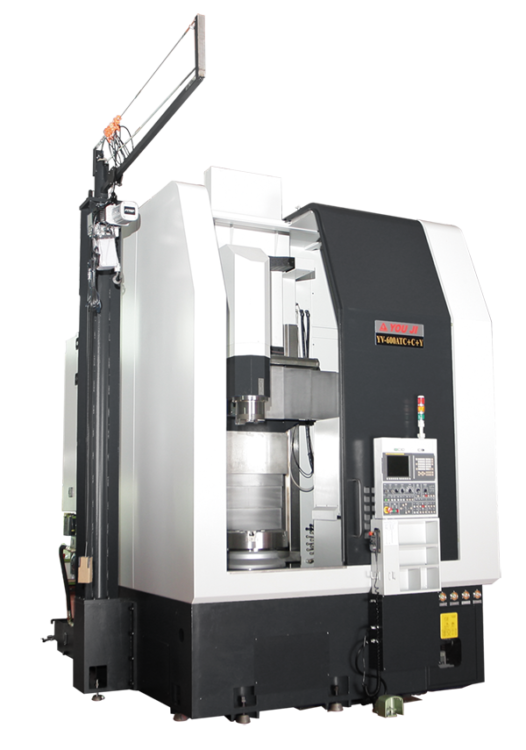
Vertical turning centers (VTCs) are compact, fully enclosed machines designed for stand-alone production or integration into automated cells. They handle parts with swings typically ranging from about 16″ to 48″ — brake discs, pump housings, aerospace castings, flanges, and similar medium-to-large chucked work. The enclosed design contains chips and coolant, and the compact footprint makes it practical to run two machines side by side for OP10/OP20 operations.
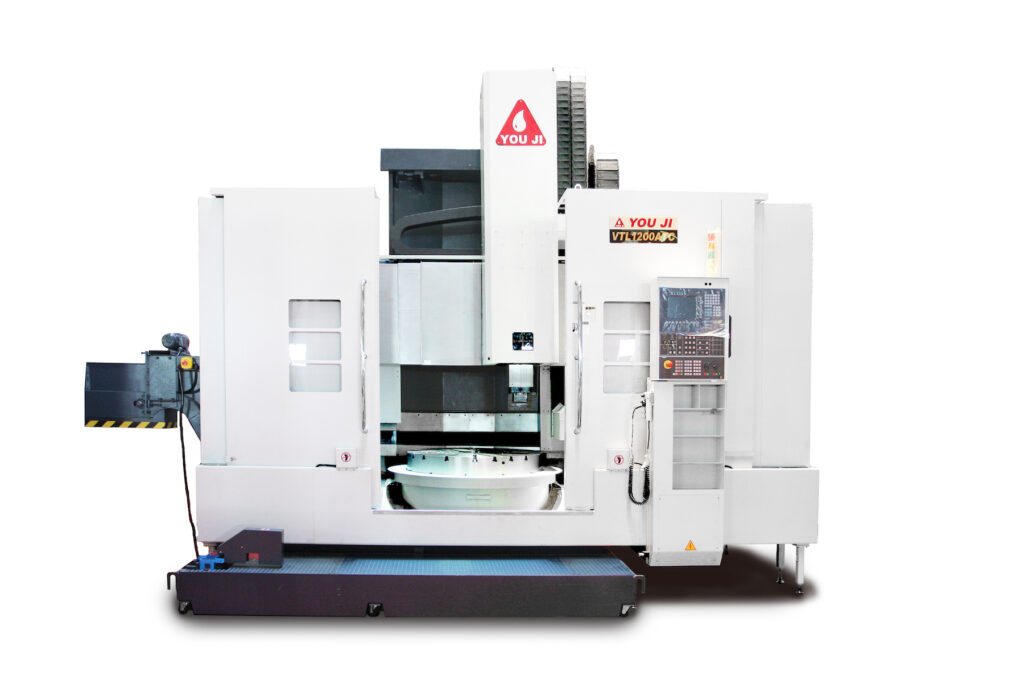
Vertical turning lathes (VTLs) are ram-type machines built for heavy-duty, high-power cutting of large and very large parts. Swings run from 43.3″ up to 354″ on the largest machines in the You Ji lineup. They handle parts that a VTC cannot reach: turbine housings, propeller hubs, large gears, heavy industrial flanges, and components where the workpiece weight alone makes horizontal loading impractical.
|
Vertical Turning Center (VTC) |
Vertical Turning Lathe (VTL) |
|
|---|---|---|
|
Swing range |
15.7″–48″ |
43.3″–354″ |
|
Construction |
Fully enclosed |
Ram-type |
|
Best for |
Medium-to-large production parts |
Large and very large heavy parts |
|
Automation |
Easy cell integration |
Crane or gantry loading |
|
Typical industries |
Aerospace, automotive, energy |
Energy, marine, construction, heavy industrial |
When a Vertical Turning Lathe Is the Right Choice
The primary advantage of vertical turning is gravity. In a horizontal lathe, workpiece weight creates off-axis loads on the spindle, and heavy or irregular parts require complex fixturing to hold in place. In a VTL, the workpiece sits on a rotating table with its weight directed straight down into the machine foundation. No off-axis loads. No fighting the part into a chuck.
Choose a VTL when:
- The part is large in diameter relative to its length, such as wide flanges, discs, rings, or housings that are difficult to chuck horizontally.
- Workpiece weight makes horizontal loading hazardous or impractical without a crane.
- Thin-walled parts require lighter clamping pressure than a horizontal chuck can safely provide; warpage from over-clamping is a genuine risk on delicate castings.
- Non-conforming or unbalanced workpieces need gravity stabilization during machining.
- Floor space is limited. A VTL handles significantly larger parts in a smaller footprint than a comparable horizontal machine.
Choose a horizontal turning center when:
- Parts are long relative to their diameter: shafts, axles, pipes, or any part requiring tailstock support.
- The production workflow uses bar feeding or magazine loading.
- The shop is optimized for horizontal part handling.
One practical rule: if the operator needs a crane, a jack, or additional personnel to load a horizontal lathe, a VTL is probably the right machine.
Vertical Turning with Live Tooling: The Done-in-One Advantage
Modern vertical turning machines are not just turning machines. With live tooling, a VTC or VTL can mill, drill, and tap in the same setup, eliminating secondary operations and the fixturing error introduced every time a part moves to another machine.
Live tooling configurations vary significantly:
- Milling and drilling: Basic live tooling allows end milling, face milling, and drilling of features not on the rotational centerline.
- Y-axis: Adds genuine linear motion perpendicular to the spindle axis, enabling keyways, cross-holes, and off-center pockets.
- B-axis tilting head: Enables angular and compound features, giving the machine 5-face and effectively 5-axis simultaneous machining capability.
- Grinding attachment: Adds deburring capability or, where tolerances allow, actual grinding operations in the same setup.
For shops machining complex aerospace castings, pump bodies, or large flanges with multiple features, done-in-one capability is a significant productivity gain. Confirm the specific axis configuration before purchase — not all models include Y-axis or B-axis as standard, and the distinction between standard and optional varies by builder.
Large Part Machining: Where VTLs Have No Alternative
For parts above roughly 40″ in diameter, a vertical turning lathe is often the only practical option. Horizontal turning centers at this scale are uncommon, expensive, and demand enormous floor space. VTLs handle large-diameter parts as a matter of course.
The industries that consistently drive large-part VTL demand are energy (pump bodies, compressor housings, valve bodies, wind turbine flanges), marine (propeller hubs, rudder components, shaft flanges), heavy construction and mining (swing housings, crusher components, large gearbox housings), and aerospace structural work (large airframe rings, bulkheads).
The relevant specification for large-part work is not just swing diameter but cutting diameter — the actual diameter the machine can machine, which is smaller than the swing. Know both numbers before specifying, and size for the largest anticipated part with room for future work.
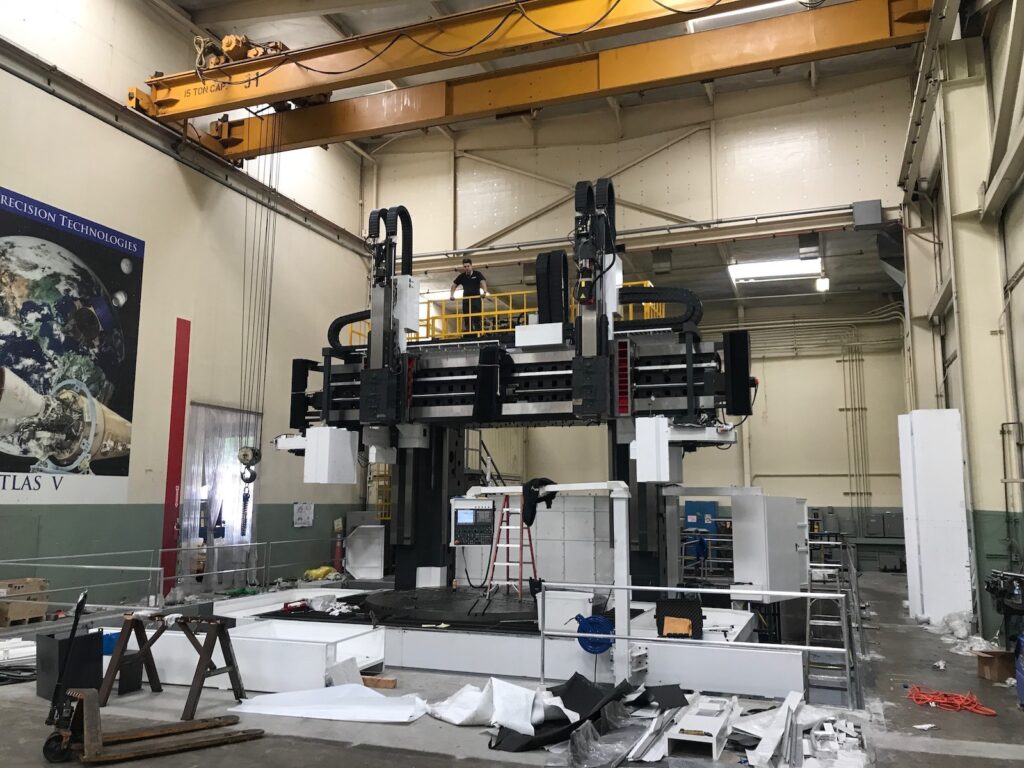
Votaw Precision: You Ji VTL-4000ATC-2R
Votaw Precision, an aerospace and commercial manufacturer whose work includes flight components and tooling for the Space Launch System program, took delivery of a You Ji VTL-4000ATC-2R in 2021. The machine weighs 280,000 lbs, stands 28.2 feet tall when assembled, and is equipped with a C-axis, live tooling, and two 16-tool automatic tool changers.
What to Look for When Sizing a VTL
A vertical turning lathe is a long-term capital investment. Getting the specification right at purchase matters more than for most tooling decisions.
Swing diameter and cutting diameter. Swing is the maximum part diameter the machine can accommodate; cutting diameter is what it can actually machine. They are different numbers, often significantly. Size for your largest current part plus a reasonable growth margin.
Spindle power and torque. Cast iron and ductile iron castings require significantly more torque than aluminum or soft steel. Heavy interrupted cuts at low spindle speeds demand a machine that will not stall. Geared table drives generate the torque profile needed for aggressive heavy-duty cuts; direct drive tables are better suited to higher-speed precision finishing.
Machine rigidity. Cast iron frames and box ways damp vibration and resist deflection under heavy cutting forces. On large-diameter, high-material-removal work, frame rigidity determines surface finish quality and tool life. A lighter-frame machine will underperform on heavy castings regardless of its rated power.
Live tooling configuration. Decide before purchase whether your current and anticipated parts require milling, Y-axis, or B-axis capability. Retrofitting is expensive. If there is a reasonable chance the shop will need done-in-one capability, spec for it now.
Automation compatibility. A right/left VTC pair for OP10/OP20 cell operation, or a gantry loader for a large VTL, needs to be planned at the machine specification stage. Table height, door clearance, and control I/O compatibility are not afterthoughts.
Control platform. FANUC, Mitsubishi, and Siemens are the most common options. Know which controls your operators and programmers are already trained on — retraining is a real cost.
Industries and Parts That Drive VTL Purchases
Vertical turning is the right process for a specific profile of parts. The industries below represent the strongest demand:
Aerospace: Turbine casings, engine mounts, landing gear components, and large structural airframe rings requiring tight tolerances over large diameters.
Automotive: Brake discs, flywheels, wheel hubs, and transmission housings — often high-volume applications where a VTC’s production cell capability is particularly valuable.
Energy: Pump bodies, compressor housings, valve bodies, and wind turbine flanges. This sector drives significant demand for both mid-size VTCs and large VTLs.
Construction and mining: Swing housings for excavators, crusher components, and large gearbox housings. Parts are often heavy castings with interrupted cuts, exactly where VTL rigidity delivers.
Marine: Propeller hubs, rudder components, and engine shaft flanges. Some of the largest VTL work in North American shops is for marine and offshore applications.
You Ji Vertical Turning Centers and Lathes from Absolute Machine Tools
An authorized You Ji dealer since 1995, Absolute Machine Tools has sold, installed, and serviced more than 2,000 You Ji vertical lathes across the U.S. and internationally. You Ji builds vertical turning equipment across the full range, from compact VTCs for production environments to some of the largest VTLs available in the North American market.
You Ji Vertical Turning Centers are available with maximum swings from 16″ to 48″ and cutting diameters from 10″ to 40″. Options include automatic tool changers (CAPTO), built-in automatic pallet changers, side heads for aerospace applications, and hydrostatic bearings for wheel turning. The compact footprint makes right/left cell configurations practical for OP10/OP20 automation.
You Ji Vertical Turning Lathes are ram-type machines with maximum swings from 43.3″ to 354″ and cutting diameters up to 350″. Cast iron frames, geared table drives, and high-torque spindle motors are standard. The VTH-8000 — the largest machine in the lineup — features a 315″ table, 354″ max swing, and 350″ cutting diameter.
See the full You Ji VTL lineup → | See You Ji Vertical Turning Centers → | You Ji brand page →
Vertical Turning Lathe FAQs: Buying, Specifying, and Configuring
Find the Right VTL for Your Application
Absolute Machine Tools has been an authorized You Ji dealer since 1995, with more than 2,000 You Ji vertical lathes sold, installed, and serviced across the U.S. and internationally.
Contact Absolute to discuss your VTL application → or call 800-852-7825.