Precision Production Turning CNC Machines

Integrated CNC solutions for high-precision, high-volume part manufacturing

Production turning is the core of modern mass production, where precision, speed, and efficiency must work together to produce thousands of tight-tolerance parts every shift. The process relies on multi-axis, high precision CNC lathes, mill-turn centers, multi-spindle screw machines, and Swiss lathes — each designed to remove material quickly while maintaining exceptional accuracy and repeatability.

Absolute Machine Tools supports every aspect of this process with a complete range of CNC precision turning solutions. Combined with advanced automation technologies and machine accessories — industrial and collaborative robots, gantry loaders, bar feeders, and bar loaders — these systems deliver continuous throughput, superior part quality, and reliable performance for high-volume manufacturing.

Benefits for Metal Cutting Manufacturers

  • Mass-production capability with consistent, repeatable tolerances across long runs
  • Reduced cycle times through multi-axis, multi-spindle, and multi-channel machining
  • In-house engineering and service support utilizing advanced CAD/CAM software for precision programming and process optimization
  • Engineers with real shop-floor experience who are trained to evaluate and recommend the most logical and efficient machining processes to achieve maximum throughput
  • Seamless integration with FANUC, Mitsubishi, and Hyundai industrial robots
  • Collaborative robot options from FANUC and Productive Robotics for flexible loading and unloading
  • Automated material handling with gantry systems, bar feeders, and bar loaders
  • Complete turnkey solutions from Print to Part, including tooling, programming, fixturing, and operator training

Production Turning Solutions from Absolute Machine Tools

Absolute Machine Tools represents world-class builders whose technologies define the production turning process:

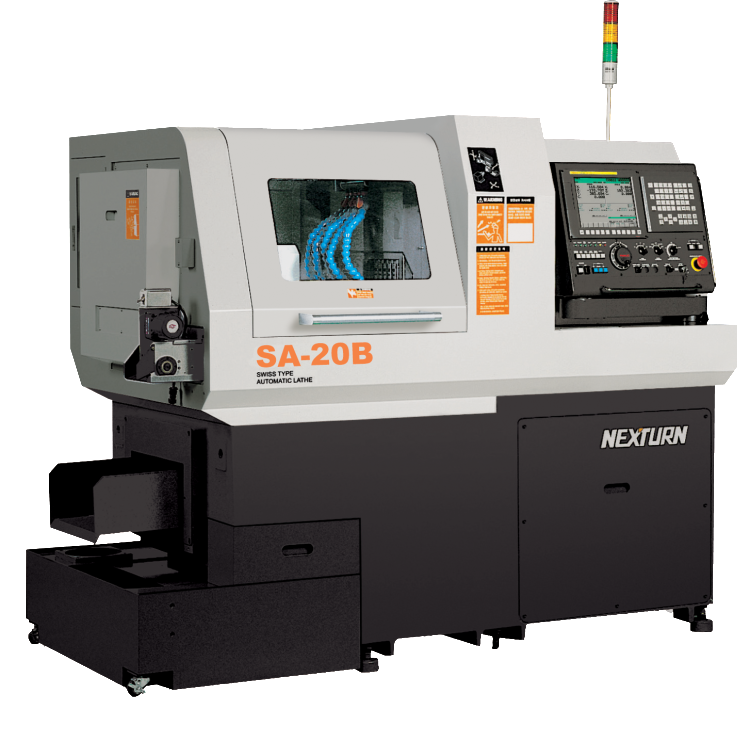
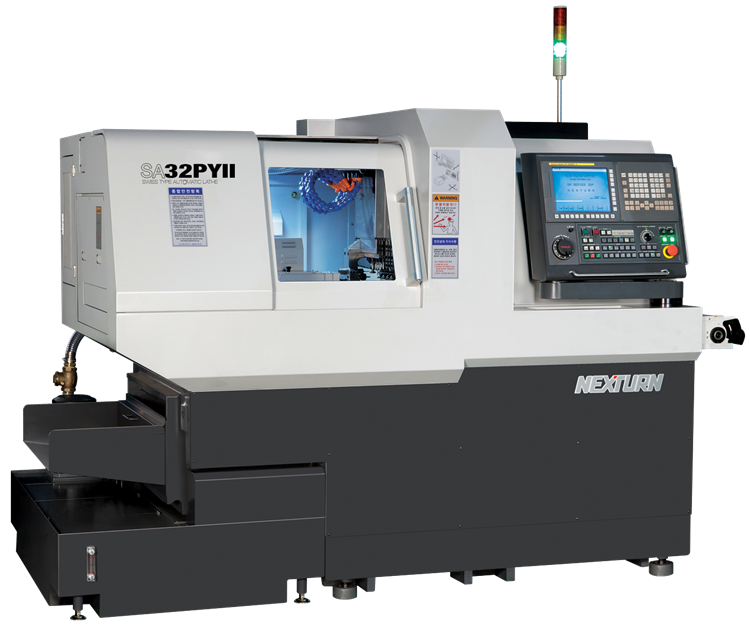
  • Nexturn: Swiss lathes for ultra-precise small-diameter parts, available in 2- and 3-channel configurations for complex, lights-out operations.
  • Quicktech: Multi-axis mill-turn centers capable of turning, tapping, and milling complex parts with outstanding accuracy and productivity.
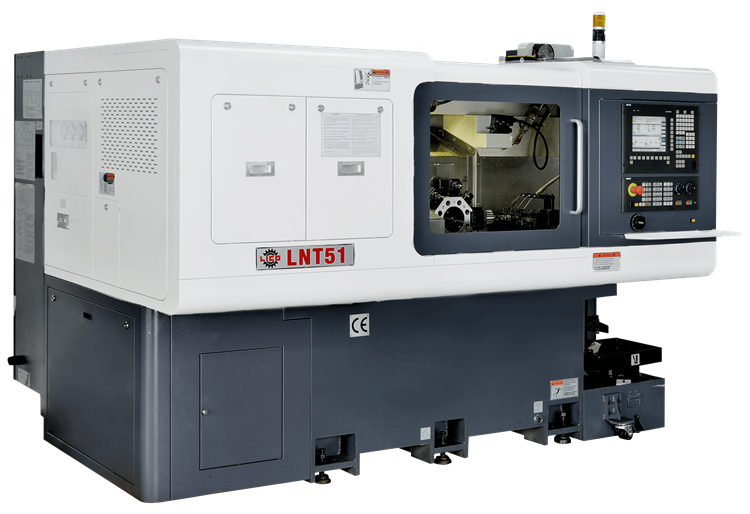
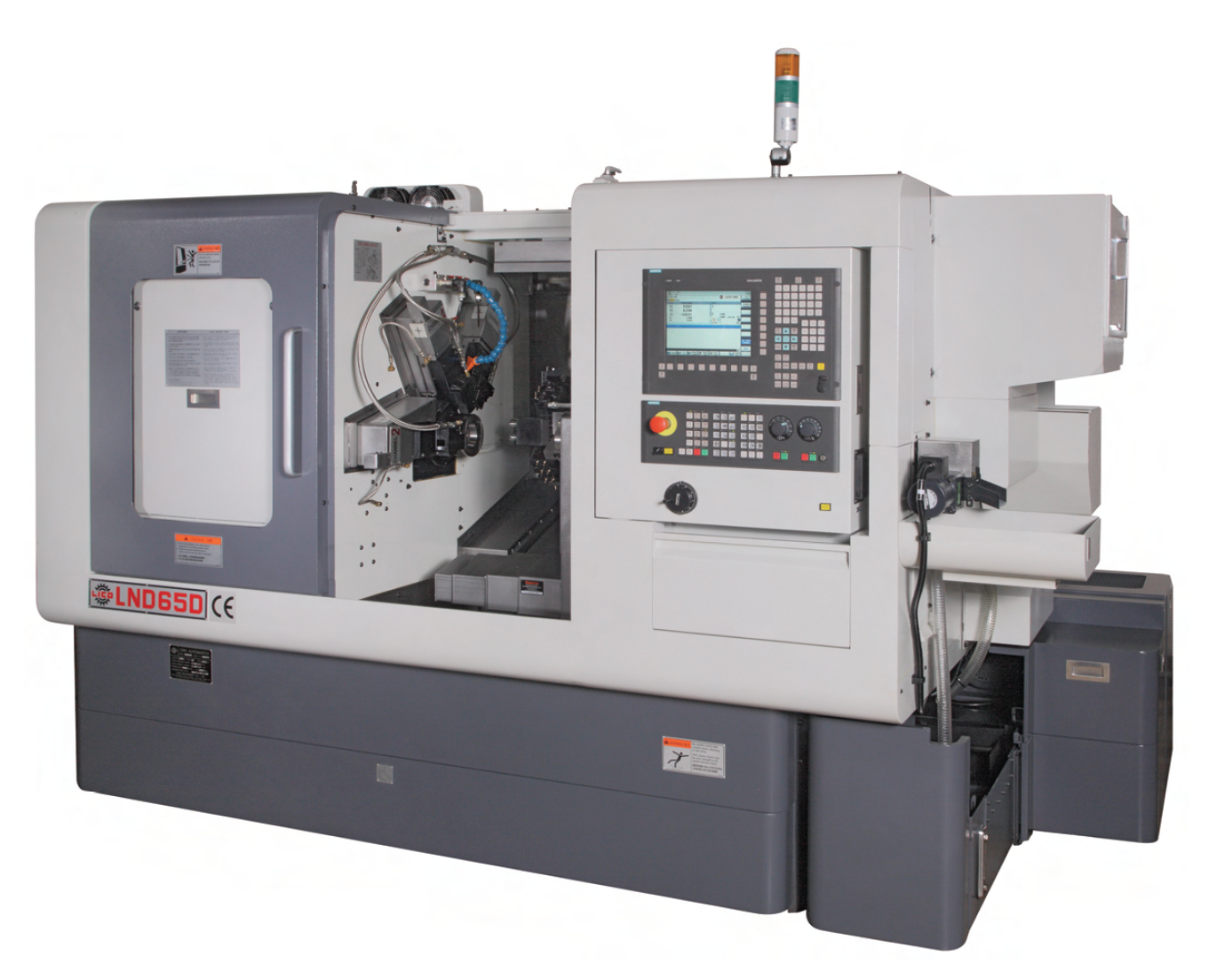
  • LICO: Multi-slide, multi-spindle screw machines engineered for high-speed, high-volume production with robust construction and exceptional tool accessibility.
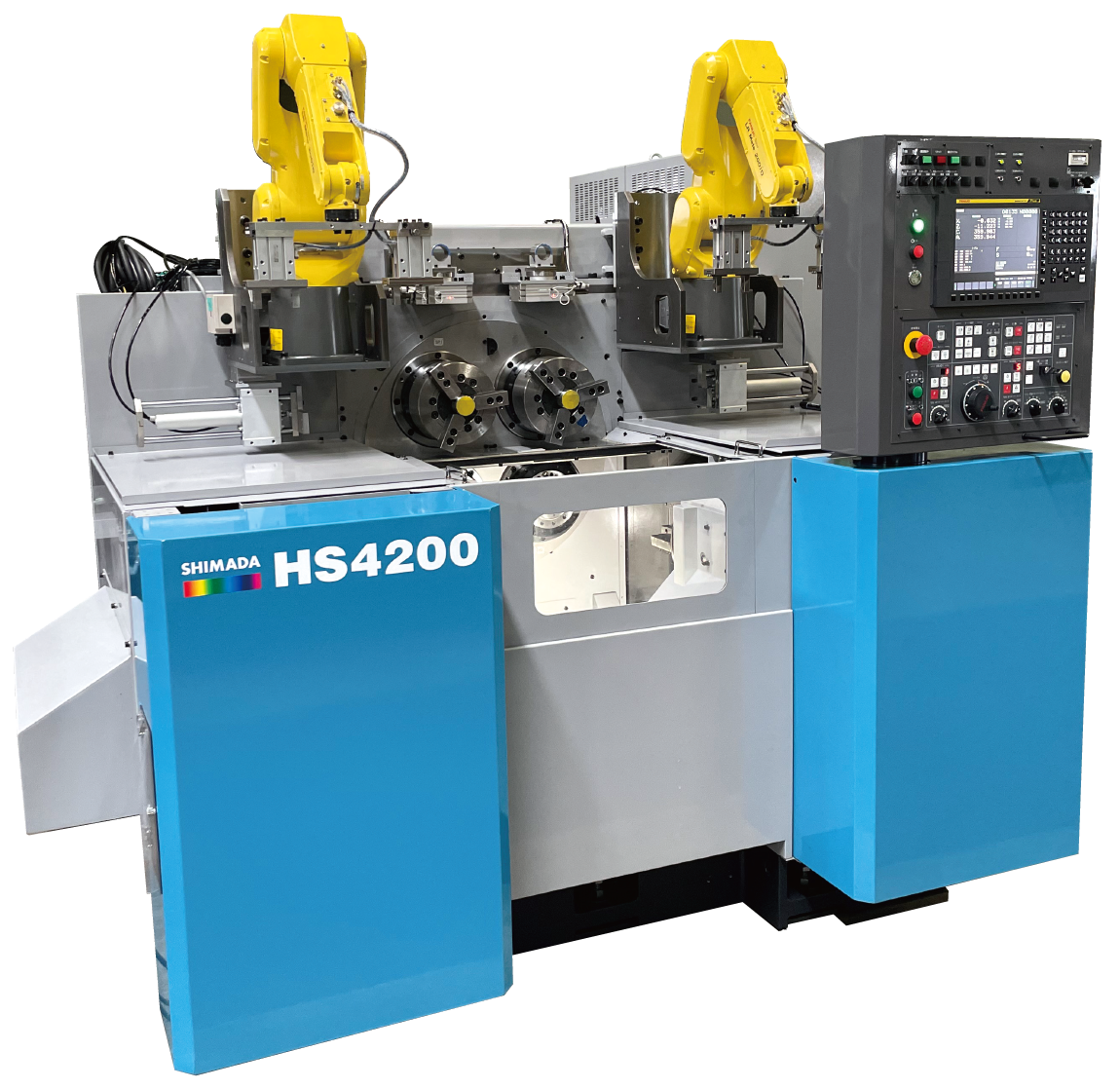
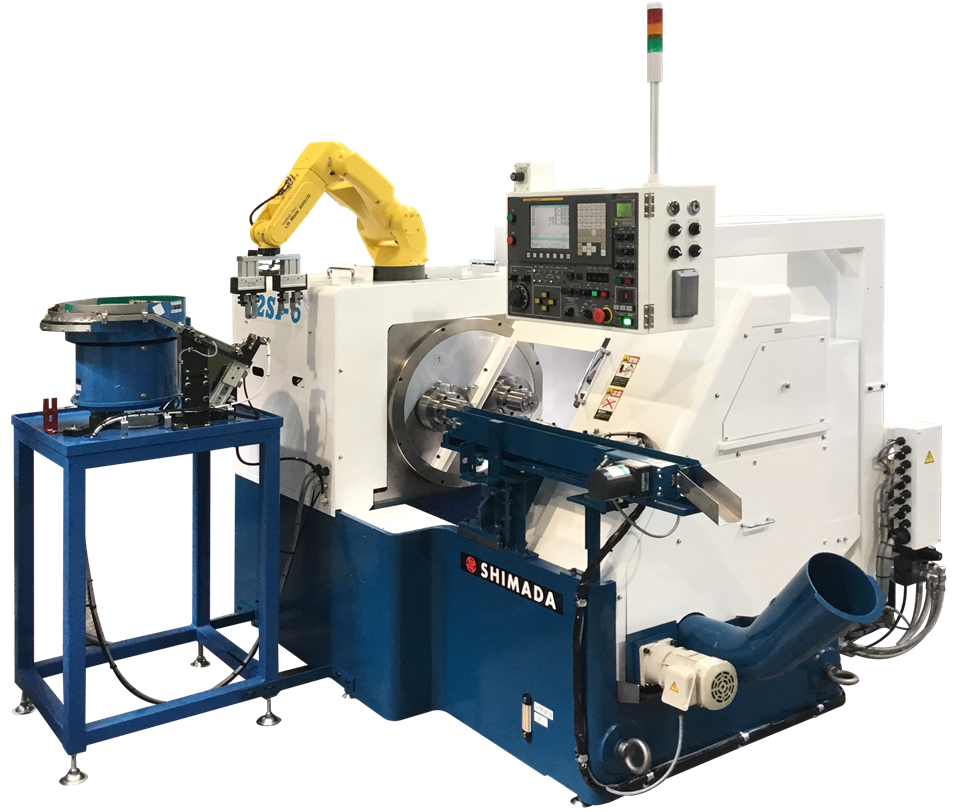
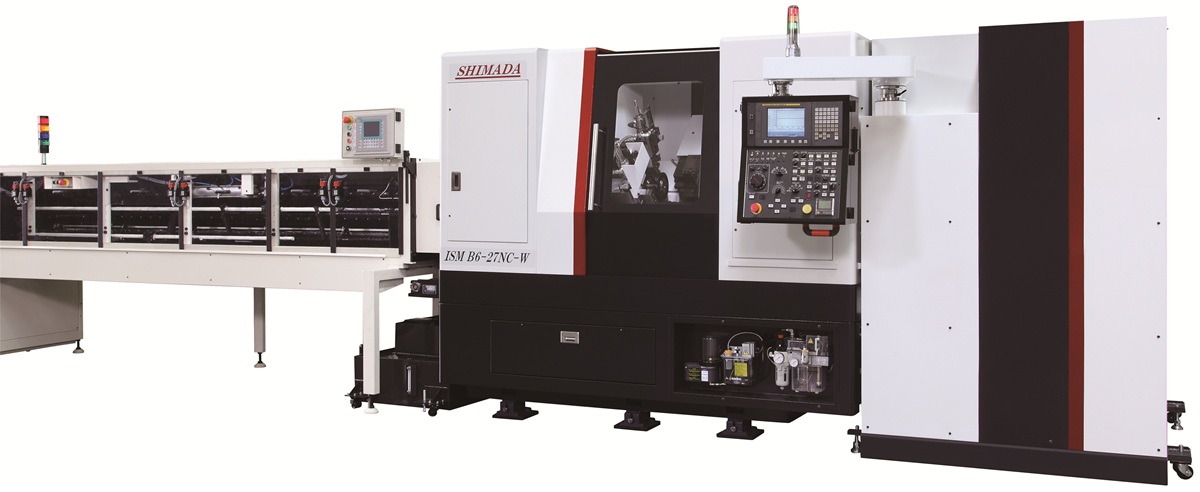
  • Shimada: Multi-spindle automatics, chuckers, and gantry-loaded systems designed for continuous mass production of precision components.
  • Johnford: SL Series 30° and 45° slant-bed CNC lathes engineered for precision production turning, offering fast cycle times, superior chip control, and dependable accuracy in continuous operation.

All are supported by Absolute’s dedicated Production Turning Applications Engineers, who understand the unique demands of this process and work directly with customers to optimize setups, reduce cycle times, and train operators for success.

Read More: Overcoming Production Turning Manufacturing Challenges
Frequently Asked Questions About Production Turning Machines

Production turning describes running the same turned part — or a tightly related family of parts — for thousands of cycles with minimal operator intervention, which is the opposite goal of job-shop turning, where the priority is changing over quickly between unrelated one-off or short-run jobs. The equipment reflects that difference: Swiss-type lathes, multi-spindle automatics, and mill-turn centers are built around bar feeding, simultaneous multi-axis cutting, and repeatable dimensional control rather than fast fixture swaps. A shop chasing high-precision CNC turning at volume typically cares less about how fast a machine reprograms for a new job and more about how many identical parts it holds within a few ten-thousandths of an inch, shift after shift, without an operator resetting offsets.

Three variables usually settle it: part diameter, how much milling or off-axis work the part needs beyond straight turning, and annual volume. Long, slender parts with several secondary features (cross-holes, flats, slots) are strong candidates for a CNC Swiss lathe. Its guide bushing supports the bar right next to the cutting tool, which keeps deflection low. Most Swiss work runs on bar of 32mm or less, and larger Nexturn Swiss models extend that range to 51mm. Parts with heavier milling, B-axis contouring or twin-spindle back-working, that are still bar-fed, tend to fit better on a mill-turn center. A mill-turn gives up some of the Swiss lathe’s small-diameter rigidity in exchange for more tool capacity and simultaneous turret operation. Once volume climbs into the tens of thousands of pieces with fairly simple turned geometry, a multi-spindle automatic often wins on cycle time, because it cuts several parts in parallel instead of one part very quickly. Absolute’s applications engineers size this against the actual print rather than a rule of thumb, since tolerance stack-up and changeover across a family of parts can shift the answer either way.

Well-maintained Swiss-type lathes and mill-turn centers running in a temperature-controlled shop routinely hold ±0.0002″ – 0.0005″ (roughly 5-13 microns) on critical diameters, and some medical and firearms components require single-tenth (±0.0001″) control on specific features. Multi-spindle automatics are typically specified closer to ±0.001″, which is still tight enough for the large majority of automotive and hydraulic-fitting work, but shops chasing sub-tenth tolerances on multiple features generally move to Swiss or mill-turn platforms, where the part is supported closer to the cutting zone. A single number on a print rarely tells the whole story, either — a shop’s real tolerance capability depends as much on coolant temperature control, tool-wear monitoring, and in-process gauging as it does on the machine’s rated accuracy.

Modern Swiss lathes, mill-turn centers, and multi-slide screw machines all carry live tooling, so cross-drilling, tapping, flats, and light contouring are typically finished in the same cycle as the turning — LICO’s multi-slide platforms, for example, can have up to five tools cutting a part simultaneously from different slide positions. Where production turning equipment reaches its ceiling is sustained heavy milling: deep pocketing, large-diameter face milling, or features that need a rigid, high-horsepower spindle rather than a live-tool station built primarily for drilling and light contouring. Parts that need that level of milling alongside turned features are usually better split between a production turning machine handling the OD/ID work and a dedicated precision milling center or CNC drill/tap machine for the rest, rather than forcing a Swiss or mill-turn spindle to do work it wasn’t built for.

A CNC Swiss lathe cuts one part at a time, but very quickly, supporting the bar close to the cutting tool through a guide bushing so it can hold tight tolerances on long, slender geometry. A multi-spindle automatic instead runs several spindles in parallel — commonly four to six — so multiple parts are being cut simultaneously, with each spindle performing a different operation as parts index from station to station; the longest individual operation sets the cycle time for the whole part rather than the sum of every operation. For simple to moderately complex parts running in very high volumes, that parallel arrangement can multiply throughput well beyond what a single spindle achieves. The tradeoff is flexibility: a multi-spindle automatic is generally committed to a longer run of one part family, while a Swiss lathe with quick-change tooling pivots to a new job faster. Shops evaluating a multi-spindle automatic against a conventional single-turret horizontal turning center face the same tradeoff — one flexible machine that changes over quickly, or several dedicated stations that outproduce it once a part is locked in.

Production turning machines are built around bar stock passing through a spindle bore, or a chucked blank sized for high-speed rotation — once a part’s envelope, weight, or milling content exceeds what that spindle and tool magazine can efficiently handle, it’s usually more cost-effective to rough or finish it on a dedicated vertical machining center instead. This shows up most often with housings, brackets, and plate-type components that start life as a turned blank but need extensive 3-axis or multi-face milling that would tie up a Swiss or mill-turn spindle far longer than its live-tool station is designed for. The practical test Absolute’s applications team applies is comparing milling time to turning time on the print: if milling dominates the cycle, the part belongs on a machining center, with production turning equipment reserved for parts where turning is still the majority of the work.

According to the Precision Machined Products Association, the U.S. precision machined products industry shipped more than $19.1 billion in components in 2022 and supports over 103,200 jobs. Its parts go into automotive, aerospace, defense, electrical, construction and medical applications. Medical device manufacturers lean on Swiss lathes and mill-turn centers for bone screws, spinal hardware and surgical instrument components, where lot traceability and micron-level repeatability matter as much as raw speed. Firearms, fluid power and electronics-connector manufacturers are also heavy users, typically running family-of-parts programs where several similar components share the same tooling setup and changeover time.

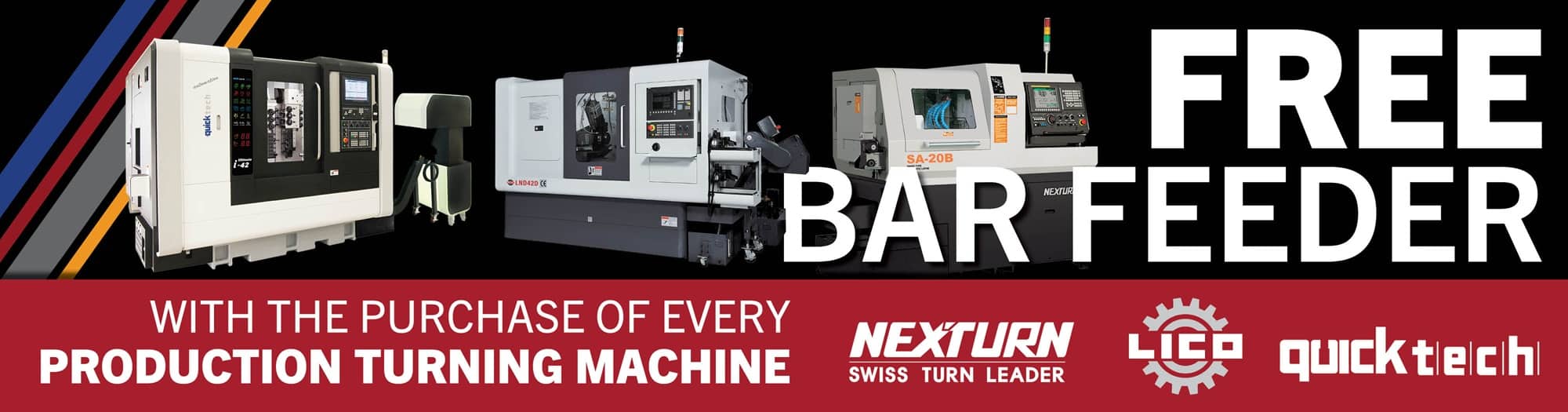
Machine price scales primarily with axis count, number of simultaneous cutting channels, and spindle/turret configuration — an 11-axis, 3-channel Swiss lathe or a 10-axis twin-spindle mill-turn center costs meaningfully more than a basic 2-axis single-spindle model, but it’s also replacing operations that would otherwise need a second or third machine. Bar feeders and robotic loaders add to the upfront number, but shops running unattended production shifts typically recover that investment within 18-24 months through added spindle-on hours alone, before even counting labor savings. Absolute Machine Tools packages a matching bar feeder at no additional cost with every Nexturn, QuickTECH, and LICO machine specifically to remove that line item from the automation payback calculation.

Absolute represents five production turning builders, each built for a different mix of part size, complexity and volume. Nexturn Swiss lathes (7- to 11-axis, up to 3 cutting channels) handle small-diameter, long, slender parts up to 51mm bar where tight tolerances and fine surface finish matter most. QuickTECH mill-turn centers go up to 10 axes with twin spindles and dual B-axes, holding up to 56 tools, for complex parts that need heavy milling alongside turning. LICO multi-slide CNC screw machines (up to 12 axes, with up to five tools cutting at once) are built to finish complex small parts in a single cycle. LICO’s twin-spindle multi-slide mill-turn centers extend that to parts up to 4″ in diameter and 17″ long. Shimada CNC multi-spindle automatics run 2, 4, 6 or 8 spindles, cutting several parts at the same time for the highest-volume work, in bar-fed, chucker and gantry-loaded configurations. Johnford SL Series 30° and 45° slant-bed lathes cover larger work, with bar capacity up to 4.5″ and up to 27.5″ swing over the bed. The biggest cost-per-part gains usually come from matching a part print to the right platform rather than using whichever machine is already on the floor.

Start with the part family, not the machine: annual volume, bar diameter or chuck size, how many features need milling versus pure turning, and the tightest tolerance on the print should all be settled before comparing models. From there, unattended run time matters — a shop planning to run lights-out overnight needs enough tool life and chip-management margin to survive a full shift without intervention, which affects the tooling budget as much as the machine selection. Finally, consider whether the part is a one-off or the first of a family: production turning equipment earns its keep fastest when tooling and programming amortize across multiple similar parts rather than a single job. Absolute’s Production Turning Applications Engineers review actual part prints before recommending a platform, since the right machine for a given job is rarely obvious from a spec sheet alone.

Contact Absolute Machine Tools Today

At Absolute Machine Tools, we deliver more than machines — we deliver complete turnkey production systems from Print to Part. Our experienced service technicians, dedicated Production Turning Applications Engineers, and automation specialists provide full process support to help manufacturers achieve true high-volume efficiency. With a large inventory of machines in stock and ready for immediate delivery, Absolute is your single-source partner for precision production turning success.

Contact our Production Turning team today to discuss your application, schedule a demo, or request a turnkey automation proposal designed to improve your output and profitability.

Videos

REQUEST INFORMATION

This field is for validation purposes and should be left unchanged.
Name(Required)
Company(Required)