Horizontal
Machining Centers

CNC Horizontal Machining Centers (HMCs) – Powerful Multi-Side Precision for Demanding Production

Horizontal machining centers (HMCs) are built for speed, accuracy, and continuous operation in high-volume environments. With horizontal spindle orientation and integrated pallet changers, HMCs allow for multi-sided machining in fewer setups, superior chip evacuation, and significantly reduced idle time. These machines are the go-to choice for manufacturers who need rugged construction, thermal stability, and lights-out performance.

Many of today’s HMCs can be seamlessly integrated with dual-pallet changers, linear pallet systems, pallet pools, and robotic automation — enabling flexible, unattended, and high-mix production. Whether you’re cutting lightweight aluminum or heavy-duty steel, horizontal machining centers deliver the throughput, repeatability, and automation readiness that modern manufacturers demand.

Benefits for Metal Cutting Manufacturers

  • Multi-Side Machining: Access multiple sides of a part in one setup with full B-axis indexing
  • Increased Throughput: Dual pallet changers minimize idle time between cycles
  • Exceptional Chip Evacuation: Horizontal orientation prevents chip accumulation and heat buildup
  • High Spindle Power: Suitable for everything from aluminum to superalloys
  • Thermal Stability: Linear scales, coolant systems, and cast-iron construction ensure repeatability
  • Ideal for Automation: Lights-out machining with pallet pools, pallet systems, and robotic loaders
  • Unmatched Rigidity: Designed for stability in both heavy and high-speed cutting

Celebrating 35 Years As a Machine Tool Importer and Distributor in North America!

Machines

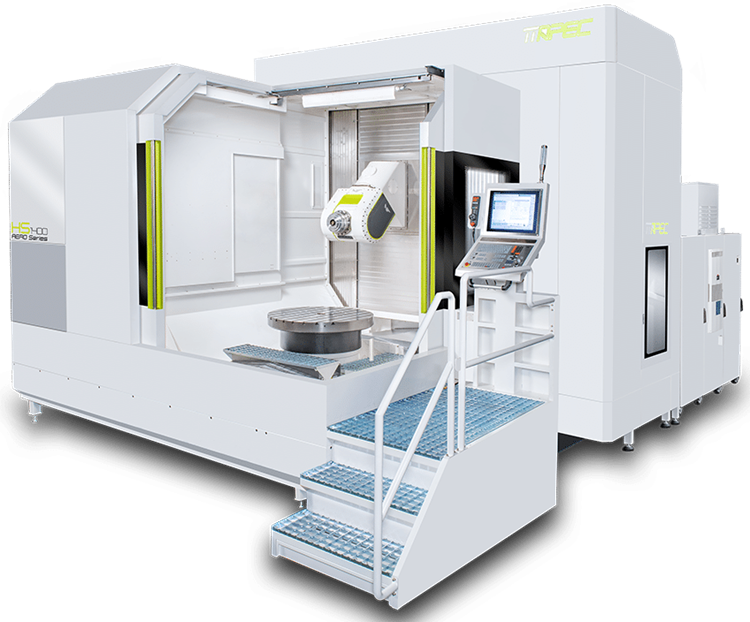
APEC HS700 Series

5-Axis Horizontal Machining Centers

APEC HS1400 Series

5-Axis Horizontal Machining Centers

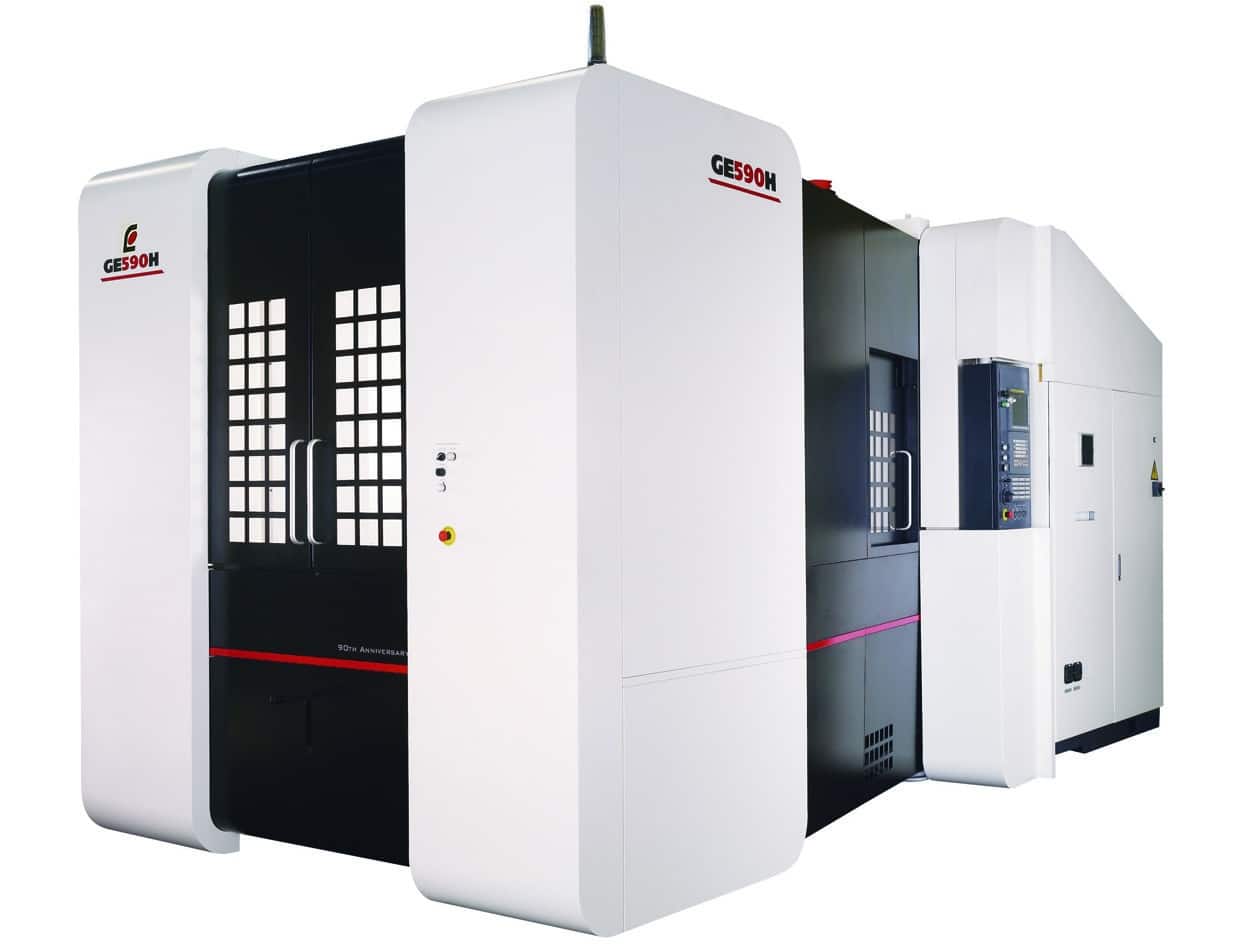
Enshu GE Series

High-Speed, High-Precision Horizontal Machining Centers

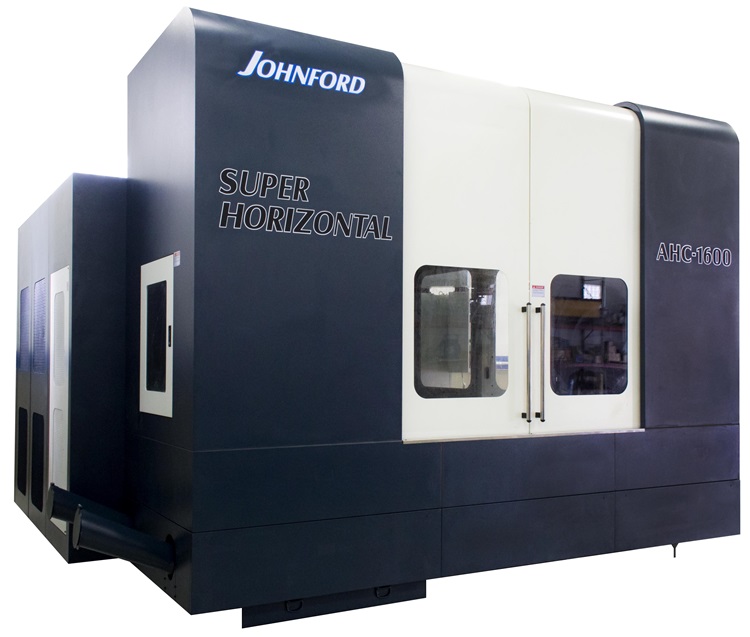
Johnford AHC Series

Moving-Column Moving-Table Horizontal Machining Center

Solutions from Absolute Machine Tools

APEC Horizontal Machining Centers

APEC (Asia Pacific Elite Corporation), a Tong Tai TTGroup subsidiary, builds high-speed 5-axis horizontal machining centers for aerospace, automotive, and mold & die industries.

  • The HS700 Series is designed for aluminum and light alloys, offering up to 20,000 RPM spindles and multi-pallet automation. It’s ideal for mid-sized aerospace components requiring speed and contouring accuracy.
  • The HS1400 Series targets large and heavy superalloy parts. With spindle torque up to 500 Nm and workpiece capacity up to 3.2 tons, it provides unmatched rigidity and thermal balance for titanium, Inconel, and complex structural parts.
  • APEC machines can be fully integrated with pallet pools, linear pallet systems, and other automation solutions to support continuous, lights-out manufacturing.

Enshu Horizontal Machining Centers

Enshu’s GE Series is known for Japanese precision, uptime, and unmatched thermal control.

  • The series includes four models: GE460H (15″ / 400 mm pallet), GE480H and GE580H (20″ / 500 mm pallets), and the heavy-duty GE590H (25″ / 630 mm pallet with 50-taper spindle).
  • GE460H and GE480H models feature 3,543 IPM rapid traverse speeds, reducing non-cut time by 20%. All models come standard with 0.001° B-axis rotation, high-torque spindle options up to 60 HP, automatic rotary pallet changers, and temperature-controlled ballscrews and spindles.
  • Enshu machines are compatible with modular pallet systems, pallet pools, and robotic loading — making them ideal for high-mix, high-volume part production environments.

Johnford Horizontal Machining Centers

Johnford, a trusted Taiwanese brand since 1979, delivers large-capacity, high-rigidity solutions for shops that require customized configurations.

  • The AHC Series features a moving-column/table design, with the AHC-1600 offering a 63″ × 32″ flat table and a 31.5″ B-axis rotary — supporting up to 10,120 lbs. on the table and 4,400 lbs. on the rotary.
  • Standard spindle is a 35 HP, 6,000 RPM gearbox type, with options up to 15,000 RPM and HSK-100A.
  • Johnford machines can be configured for automated pallet handling systems, dual-pallet changers, or custom automation interfaces — delivering flexible, application-specific production solutions.

What is a pallet pool and when does my shop need one?

A pallet pool expands beyond the standard two-pallet APC found on most HMCs, typically adding six or more pallets that can be called up in any order under CNC control. Each pallet can hold a different fixture or job, allowing the machine to switch between parts automatically without operator intervention. This is the key to lights-out and unattended machining — if one job runs out of material, the machine automatically moves to the next pallet and keeps cutting.

Pallet pools are most valuable when you have a consistent mix of recurring jobs, when you want to run extended unattended shifts (evenings, weekends), or when you need to maximize spindle utilization on high-value machines. If your shop runs mainly one or two parts at a time on short production runs, a standard two-pallet APC may be sufficient. But for shops with diverse job mixes, higher-volume production, or aspirations for lights-out operation, a pallet pool can dramatically increase machine utilization and reduce labor cost per part.

Let’s Build Your Next Horizontal Machining Solution

Ready to take your production to the next level? Whether you need high-speed 5-axis machining, heavy-duty cutting capability, or fully automated palletized workflows, Absolute Machine Tools has the right solution. Contact us today to speak with our engineering team and discover how we can deliver a turnkey horizontal machining system tailored to your performance, part, and process goals.

Frequently Asked Questions About Horizontal Machining Centers

A horizontal machining center (HMC) is a CNC milling machine with its spindle oriented parallel to the worktable, as opposed to a vertical machining center where the spindle points straight down. This horizontal spindle orientation provides several inherent advantages for production work: chips fall away from the cut under gravity rather than collecting on the workpiece, and the machine’s layout naturally accommodates a two-pallet automatic pallet changer (APC) so an operator can load parts on one pallet while the machine cuts on the other. 


HMCs are typically built with larger tool magazines (40–60+ pockets standard), integrated rotary B-axis tables for multi-face machining, and heavier, more rigid castings designed for sustained production cutting.

While VMCs are more common for general-purpose work and carry a lower purchase price, HMCs are purpose-built for higher throughput, longer unattended run times, and multi-sided prismatic parts like valve bodies, pump housings, and aerospace structural components.

HMCs excel on prismatic, box-shaped parts that require machining on multiple sides — the kinds of work where a VMC would need repeated refixturing. Common applications include automotive transmission housings and engine blocks, aerospace structural components and brackets, hydraulic manifolds and valve bodies, pump housings, gearboxes, and mold bases. Any part where you need to access three or more faces in a single setup is a strong HMC candidate.

The horizontal spindle orientation combined with a 360° rotary B-axis table allows the machine to index the workpiece and cut on four sides without operator intervention.

HMCs are also well-suited for high-volume production environments where tombstone fixtures can hold multiple parts simultaneously, maximizing spindle utilization across an entire shift or enabling lights-out operation.

The productivity difference is significant. Industry research has shown that typical VMC spindle utilization — measured by actual chip-cutting time — averages around 25%, while HMC utilization routinely reaches 85%. In a standard eight-hour shift, that translates to roughly seven hours of cutting on an HMC versus two hours on a VMC.

Several factors drive this gap: the two-pallet APC eliminates load/unload downtime, tombstone fixturing allows multiple parts to be machined per cycle, multi-face access reduces the number of setups per part (a six-sided part might require seven or more handling steps on a VMC but only two or three on an HMC), and better chip evacuation means fewer interruptions for cleaning.

Many manufacturers report that a single HMC can replace three to four VMCs in terms of overall output, which also reduces the number of operators, fixtures, and floor space required.

A tombstone (also called a tooling column or fixture tower) is a multi-faced workholding fixture — typically two-sided, four-sided, or six-sided — that mounts to the HMC’s pallet and presents multiple parts to the spindle at right angles. The rotary B-axis table indexes the tombstone so the machine can access each face without stopping.

This arrangement is one of the HMC’s biggest productivity advantages: a four-sided tombstone with four parts per face means 16 parts can be machined in a single cycle.

Tombstones can be configured with manual clamps, hydraulic fixtures, or pneumatic workholding, with hydraulic and pneumatic lines integrated through the pallet for automatic clamping. Common configurations include cube (four-faced), double-sided, triangular, and octagonal designs, available in standard sizes like 400mm and 500mm to match common pallet dimensions.

Most standard HMCs are 4-axis machines — three linear axes (X, Y, Z) plus a rotary B-axis table that indexes the workpiece to access multiple faces. This is sufficient for the majority of prismatic production work where features are perpendicular or parallel to the pallet surface.

A 5-axis HMC adds a second rotary axis (typically an A-axis tilt) that enables simultaneous contouring on complex geometry — think aerospace impellers, turbine blades, or complex structural components with compound-angle features. The tradeoff is cost and complexity: 5-axis HMCs carry a significant price premium and require more advanced CAM programming.

If your parts primarily need multi-face indexing rather than true simultaneous 5-axis contouring, a 4-axis HMC with a quality rotary table will handle the job at lower cost and simpler programming.

For complex freeform geometry, explore dedicated5-axis CNC machines including horizontal 5-axis models like the APEC HS Series that Absolute carries, which are designed for high-speed aerospace machining with multi-pallet pools.

Spindle taper selection depends on the type of cutting you’ll be doing. CAT40 (or BT40) is the most common choice for general-purpose HMC work and offers a good balance of rigidity, speed (typically up to 10,000–12,000 RPM), and tool availability. It suits most machining operations with cutters under 3 inches in diameter.

CAT50 (or BT50) provides substantially more rigidity and torque for heavy-duty cutting — deep pocketing in steel, large face mills, long-reach boring bars — but at lower maximum spindle speeds. If you plan to use 3-inch or larger cutters, take deep cuts in tough materials, or run tools exceeding 20 inches in length, CAT50 is the better choice.

HSK (Hollow Shank) tapers use a dual-contact system (both taper and face) for superior rigidity at high speeds, making them common on high-speed aerospace HMCs running 15,000+ RPM. BT tapers are functionally similar to CAT but use metric thread retention knobs and have a symmetrical design that provides better balance at high RPM.

Choose based on your primary material, cutting forces, and spindle speed requirements.

New horizontal machining centers typically range from approximately $250,000 to well over $1,000,000, with the average entry-level production HMC in the $300,000–$400,000 range — roughly three times the cost of a comparable VMC. For reference, a Haas EC-630 4-axis HMC with a 50-tool magazine and twin pallets starts around $350,000, while 5-axis HMC models from premium manufacturers can exceed $500,000–$700,000.

Key pricing factors include pallet size (400mm, 500mm, 630mm, 800mm, or larger), spindle taper and power, axis travels, tool magazine capacity, the number of pallets or whether a pallet pool system is included, the CNC control brand, and whether options like through-spindle coolant, probing systems, or chip conveyors are included.

Beyond the machine itself, shops should budget for tombstones, workholding, tooling (a 60-pocket ATC stocked with CAT50 holders adds up), and potentially upgraded shop air and electrical. While the upfront cost is significantly higher than a VMC, the productivity gains often deliver faster ROI when the machine can be kept loaded with work.

HMCs are designed around pallet-based workholding for parts that can be fixtured on tombstones or mounted directly to a pallet — typically parts that fit within the machine’s pallet size (commonly 400mm to 1,000mm).

When your parts outgrow these dimensions — large structural components, stamping dies, mold bases, or aerospace panels — a bridge mill or double column machining center becomes the better platform. Bridge mills offer much larger work envelopes with table sizes that can reach 4,000mm or more, and they’re built with massive one-piece castings for the rigidity needed to machine large, heavy workpieces. Absolute carries Johnford bridge mills with table capacities up to 140,000 lbs and APEC large-format 5-axis gantry machines for aerospace structural work.

The key distinction is that HMCs are optimized for pallet-changeable production throughput on medium-sized parts, while bridge mills are engineered for large-envelope, heavy-duty machining where the part stays on a fixed table.

Absolute Machine Tools represents four HMC brands, each addressing different segments of the market.

APEC (part of the TTGroup/Tongtai family) offers the HS700 Series horizontal 5-axis machining centers designed for high-speed aerospace aluminum machining at up to 20,000 RPM with multi-pallet configurations.

Enshu provides Japanese-built compact HMCs (GE460H through GE590H) with rapid traverse rates up to 3,543 IPM and 0.001° B-axis indexing accuracy — precision production workhorses for automotive and general manufacturing.

Johnford offers moving-column HMCs like the AHC-1600 (35 HP gearbox, 10,120 lbs table capacity) and CAT-50 models for heavy milling.

Tongtai (formerly Hitachi Seiki OEM) builds compact SH Series HMCs designed for mass production environments.

All machines are available from Absolute’s U.S. inventory with domestic spare parts support.

Standard HMCs are milling machines — they don’t have the spindle configuration for true turning operations (spinning the workpiece against a stationary tool).

If your parts need both milling and turning in one setup, a mill-turn center is the better solution. Mill-turn machines like the QuickTECH i-Series that Absolute carries combine a turning spindle with live milling tools and a B-axis for true multi-axis done-in-one machining.

However, some advanced HMCs with high-precision rotary tables can perform interpolated turning (circular interpolation of the X and Z axes while the B-axis rotates) for features like O-ring grooves or seal bores, though this is limited compared to a dedicated turning platform.

For parts that are primarily prismatic with a few turned features, an HMC with interpolated turning can sometimes eliminate the second operation.

For parts that are fundamentally turned with added milling features, a mill-turn center is the right choice.

Superior chip management is one of the HMC’s inherent advantages — the horizontal spindle orientation means gravity pulls chips away from the cut zone and off the workpiece, unlike a VMC where chips tend to accumulate on the part surface and worktable. Modern HMCs typically include an integrated chip conveyor (hinge-belt or scraper type) that runs beneath the work zone and automatically transports chips to a collection bin or cart at the machine’s rear.

High-production machines often add high-pressure through-spindle coolant (TSC) at 300–1,000+ PSI to blast chips out of deep bores and pockets and improve tool life in difficult materials. Enclosure wash-down systems with programmable coolant nozzles help clear chips from the table, tombstone, and fixturing between cycles.

For aluminum machining at high speeds, efficient chip evacuation prevents re-cutting (where a chip gets trapped between the tool and workpiece), which improves surface finish and extends tool life — a meaningful advantage for shops producing CNC drill/tap secondary operations and high-speed aluminum production.

REQUEST INFORMATION

This field is for validation purposes and should be left unchanged.
Name(Required)
Company(Required)