Most CNC shops operate 40 hours a week. The machines they own are capable of running 168. That gap is 128 hours of idle capacity every week. Lights-out manufacturing closes it.
Lights-out manufacturing keeps equipment running 24 hours a day, 7 days a week using automation rather than constant operator attention. The name comes from the fact that a fully automated facility can continue running after the lights, heat, and AC are turned off at the end of the workday.
The Rise of Lights-Out Manufacturing in CNC Shops
Lights-out manufacturing is not a new concept. FANUC has been running a lights-out factory since 2001, where robots build other robots with minimal human involvement. The concept gained mainstream attention in the early 1980s when General Motors Chairman Roger Smith opened a “factory of the future” in Saginaw, Michigan, attempting to build fully automated plants that could compete with Japanese manufacturers. The vision proved difficult to execute at GM, but the broader movement it represented laid the groundwork for what followed.
What has changed is accessibility. Advances in collaborative robotics, bar feeding technology, and integrated machine interfaces have made lights-out operation practical for job shops and contract manufacturers that would have considered it out of reach a decade ago. The question for most shops today is not whether lights-out is possible, but where to start.
Advantages of Lights-Out Manufacturing
The core appeal of lights-out manufacturing is more production hours without proportionally more labor costs. The advantages go further than that:
Which CNC Machines Are Best Suited for Lights-Out Production?
Not every machine or job is a good lights-out candidate on day one. The best starting points share a few common traits: predictable cycle times, proven tooling life, manageable chip production, and consistent workholding.
Swiss-type lathes are among the most natural lights-out machines in a CNC shop. Bar feeders automatically advance stock, cycle times are typically short and consistent, and the guide bushing design keeps parts stable throughout the cut. A Swiss lathe with a bar feeder can run hundreds of parts unattended with minimal setup intervention.
Turning centers follow the same logic. As long as tooling life exceeds the length of the unattended run and chip management is handled, turning centers are reliable lights-out candidates with a bar feeder.
Vertical machining centers require a different approach. Since VMCs machine one part at a time, a cobot or gantry loader is needed to handle part loading and unloading between cycles. With an auto door kit and a cobot cell, a VMC can run through the night just as effectively as a lathe with a bar feeder.
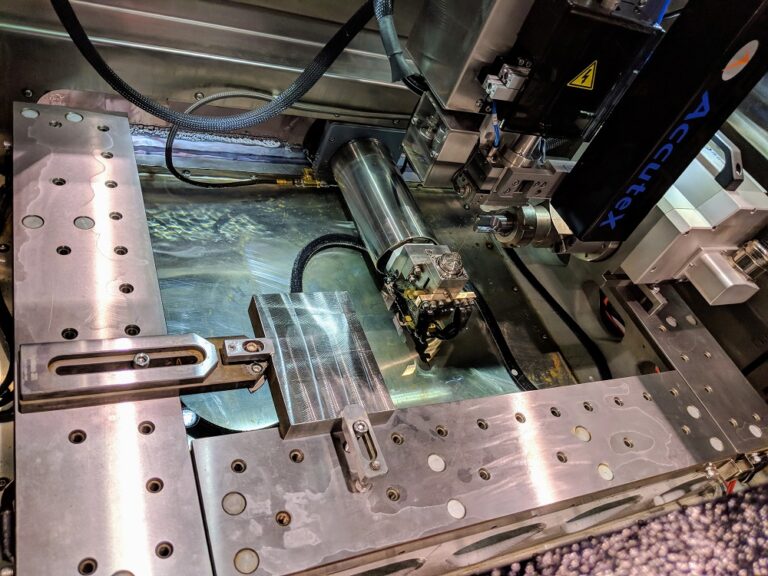
Wire EDM machines are particularly well suited for lights-out because they require virtually no cutting force, produce minimal chips, and run long, predictable cycles. True Precision Machining found that adding an OB7 cobot to their wire EDM allowed them to finish a 500-part job in 3.5 days, a job that previously took a full week, running through nights and weekends with no operator present. Read the True Precision case study →
What You Need Before Running Lights-Out
Running a machine lights-out is not something to attempt on a job that hasn’t been proven out attended first. Before committing to unattended operation, a few things need to be in place:
How to Start Your First Lights-Out Run
The most common mistake shops make is starting too ambitiously. A gradual approach reduces risk and builds confidence.
- Choose the right job. High-volume, long-cycle-time jobs with a proven process are the best starting point. Short-run, first-article, or complex multi-setup jobs are not.
- Prove it attended. Run the job through a full shift with an operator present, monitoring tool wear, chip behavior, and part quality. Make sure everything is consistent before leaving the machine unattended.
- Start with a Friday night run. The first lights-out attempt is low-stakes: a Friday evening when someone checks the machine Saturday morning rather than discovering a problem after a full weekend of running.
- Monitor remotely. Set up machine monitoring on your phone or tablet before leaving. Most modern CNC controls allow remote status checks.
- Review the parts in the morning. Check the first parts carefully, inspect tooling, and evaluate what happened differently from attended operation.
- Extend gradually. Once a single overnight run is reliable, extend to a full weekend run, then add a second machine. Build lights-out capacity incrementally rather than converting the entire shop at once.
Lights-Out Automation Solutions from Absolute Machine Tools
Absolute carries the full range of equipment needed to build a lights-out operation at any scale.
Bar feeders are the most accessible entry point for turning and Swiss lathe operations. The TRACER line covers small-diameter Swiss work through full-size production turning and short-bar applications. See the TRACER bar feeder lineup →
Auto Door Kits automate CNC machine door operation, allowing cobots to run machine tending cells without a human operator opening and closing the door between cycles. A practical prerequisite for any cobot-based lights-out cell.
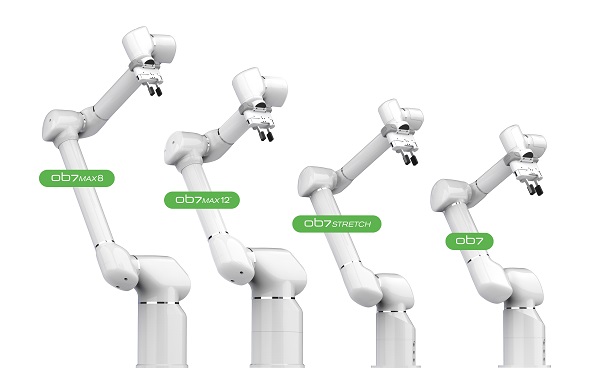
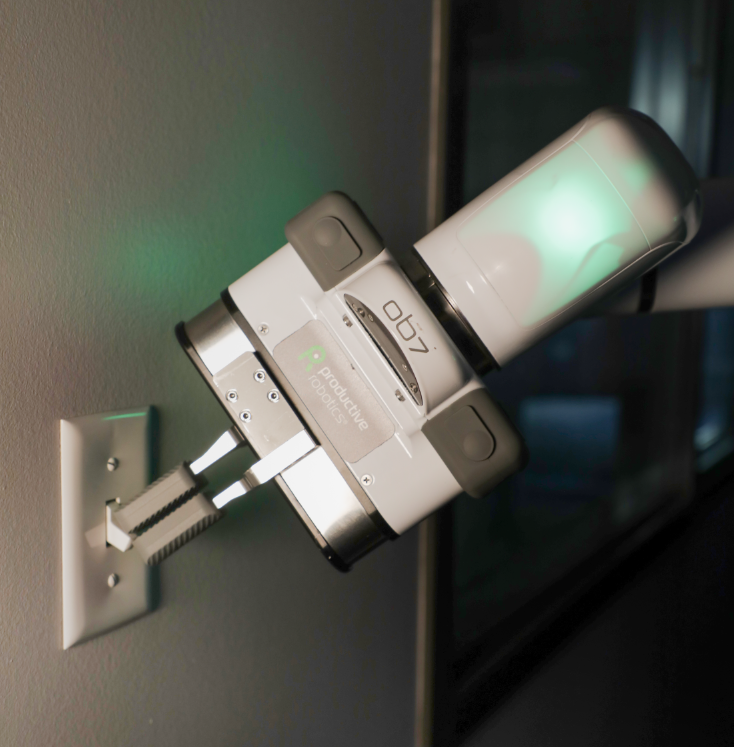
The OB7 cobot from Productive Robotics is the most popular solution for VMC and turning center machine tending. CNC packages start at $39,900, include everything needed for a first machine tending job, and require no programming. Operators teach the OB7 by physically moving the arm through the task. The 7th axis allows placement beside the machine door rather than in front of it, keeping operator access open during attended shifts.
FANUC CRX collaborative robots handle higher-payload or more demanding machine tending applications. As an authorized FANUC integrator, Absolute’s automation engineers design, install, and support FANUC robotic systems for lights-out cells across machine types.
The LoadMate Plus from Mitsubishi Electric is designed for shops running multiple machines or requiring higher throughput than a single cobot provides. It extends automation to larger, heavier parts and multi-machine configurations.
The Master Interface Unit (MIU) connects any of these solutions to virtually any CNC machine without custom integration work, making it practical to add lights-out capability to older machines that would otherwise require significant engineering effort. Learn more about the MIU →
Real-World Lights-Out Results
Swiss Productions in Ventura, California, was getting 9 hours of daily production from their Haas Mill, with an operator loading and unloading every 7-8 minutes. After adding OB7 cobots, they reached 76 hours of weekly production and have since added a second OB7. The operator who previously tended the machine now runs two smaller lathes simultaneously. Read the Swiss Productions case study →
Lights-Out Manufacturing FAQs
Is Your Shop Ready to Go Lights-Out?
Most shops that are considering lights-out already have the right jobs for it. They just haven’t taken the first step. A single Friday-night run on a proven job can generate more production than an entire extra shift, with no additional labor cost.
Absolute’s automation engineers work with shops of all sizes to identify the right starting point, select the right equipment, and support the implementation from first run to full production.