A cobot typically delivers ROI within 6 months — but every shop’s costs are different. The calculation depends on your labor costs, current cycle time, throughput goals, and budget. Here are the 9 questions Absolute’s automation engineers work through with every customer before recommending a solution.
9 Questions That Determine Your Cobot ROI
Before recommending any solution, Absolute’s automation engineers work through these questions with every customer:
- How are you currently executing the job you want to automate?
- What is the cost per employee for Workers’ Compensation?
- What are the current ergonomics you’re looking to improve?
- What is your current throughput and what are you ultimately aiming for?
- Do you have adequate Cap X money for the project or are you running on a budget, and if so, what is it?
- What is the current cycle time?
- How much do your operator(s) earn?
- What is the current tack time it takes to complete the job?
- What is the cost per employee for any benefits?
Now we can get to work!
What a Typical ROI Calculation Looks Like
Here’s how those questions translate into a real calculation. This example uses a job shop running a VMC making aluminum components with two operators across two shifts:
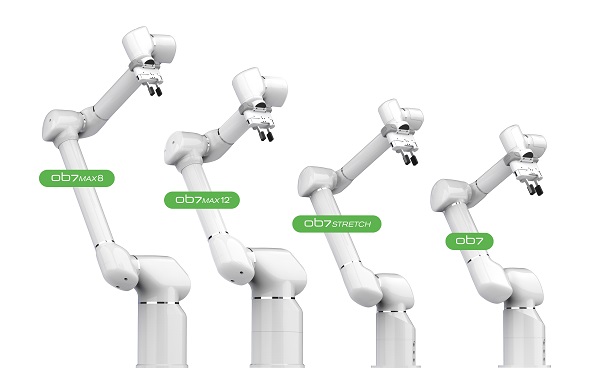
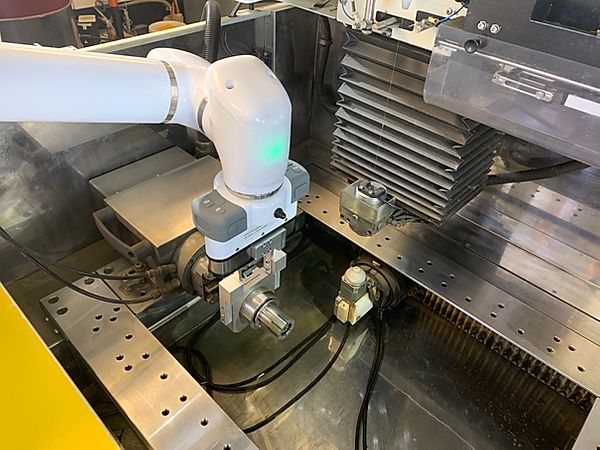
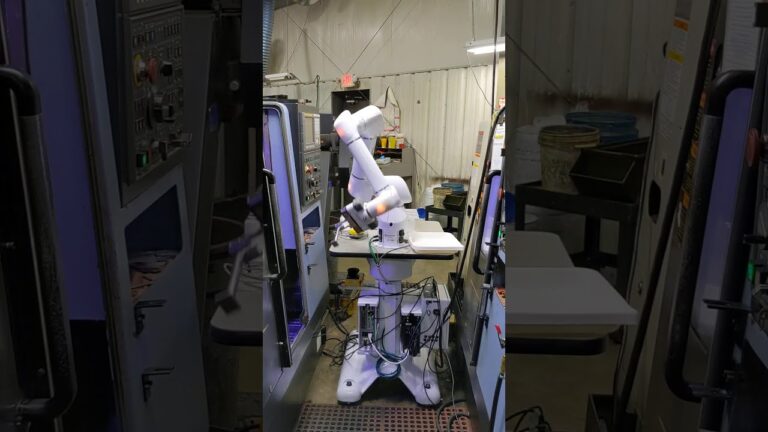
With an OB7 cobot tending the machine through a third shift, the shop adds approximately 480 unattended production hours per month. At a $28/hour fully loaded labor rate, the cobot pays for itself in under 6 months. For a step-by-step guide to running that third shift, see how lights-out manufacturing works in practice.
Every shop’s numbers are different — which is why the questions above matter. A shop with higher labor costs or longer cycle times will see faster ROI. A shop running short-run jobs with frequent changeovers will need a different calculation entirely. Once the math checks out, implementation starts with Step 1. Here’s the complete guide →
For a deeper look at how Absolute approaches cobot ROI in practice, see the SME Media article When Work Cells Work for Machine Tools.
Writing the Scope of the Project
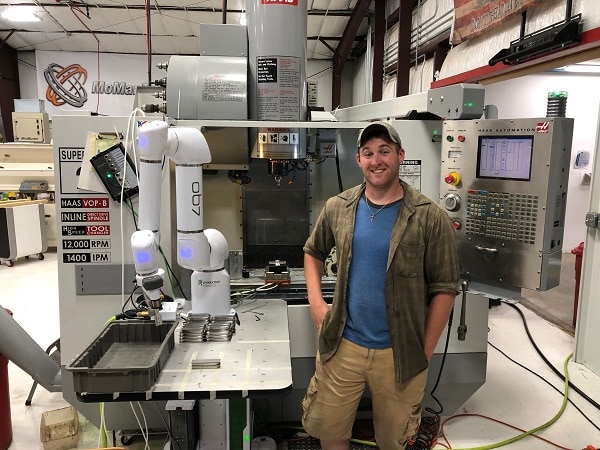
Together with the customer, Absolute’s automation engineers estimate a solid ROI, take the budget into consideration, and write a scope of the project. If these steps are implemented immediately at the beginning of the conversation, then the balance of the project will be a success.
This process helps both the customer and Absolute determine the best equipment to meet their ROI and expectations. An accurate scope of the project allows us all to understand the necessary components to make the project a success, otherwise it could be a total disservice to all involved.
“Our goal is to help the customer understand the real true scope so there are no surprises. We deal with customers using automation every day, so it’s our job to ensure the customer is comfortable with all the steps that will encompass a successful automation installation,” said Zunis.
Ready to Calculate Your Cobot ROI?
Once you’ve worked through the ROI math, the next step is talking to someone who can build the actual cell. Absolute’s Automation Team has helped dozens of shops go from ROI calculation to running automation.
See what’s possible → | Call: 800-852-7825