

A bar feeder is the most common automation accessory in production turning — and for good reason. Bar feeders provide a simple, dependable means of automatically delivering material to a CNC lathe, sparing operators the task of having to continually reload and feed stock material during a job. The result is less labor, less downtime, and the ability to run your machines longer with less supervision.
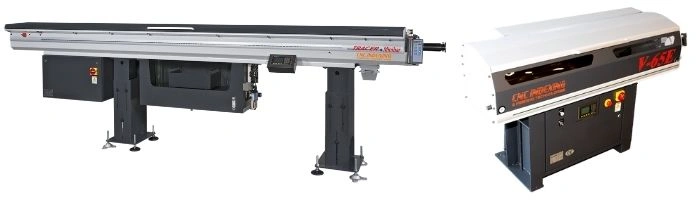
While automatic bar feeders aren’t a necessity, they’ll sure make things easier for your machinists. They’re especially valuable for high-volume jobs, but the efficiency gains extend to smaller lot sizes as well — any time an operator can step away from one machine to oversee another, productivity improves across the shop.
Bar feeders have many nuances from one to another that make them more suitable to certain shop environments. Length and capacity are only the beginning. Feeding method, bar diameter range, floor space, and spindle liner compatibility all factor into finding the right fit. This guide walks through everything you need to consider so you can make a confident buying decision.
Why Add a Bar Feeder to Your CNC Lathe?
You may be wondering if a bar feeder is worth the investment. There are many advantages to adding one to your job shop:
- Reduces operator involvement. Bar feeders reduce the need for an operator to monitor and feed material into a machine tool, freeing them up to oversee other machines or tasks simultaneously.
- Improves part quality. Bar feeders secure and support bar stock during the turning process, increasing stability and reducing the effects of vibration on the finished product.
- Maximizes spindle speed. With bar stock properly supported and fed, your machine tools can operate at full spindle speed without interruption.
- Reduces waste material. Consistent, controlled feeding means less material lost to overfeeding or handling errors.
- Minimizes changeover times. Faster transitions between bar stock mean more uptime and less time spent on manual reloading.
- Enables lights-out production. Magazine bar feeders are capable of delivering large quantities of material to a machine tool for extended periods of time — often 8 hours or more — allowing you to run unattended through nights and weekends.
It’s also worth noting that bar feeders aren’t just for shops running the same part over and over in long production runs. Most shops are running mostly the same types of material and similar part sizes. A shop can run 500 pieces with a bar loader, and while that job is running, the operator can be overseeing additional machines. When the first job is complete, the operator can quickly load the program for another part of similar size and have the machine up and running again. Even in small lots, shops are always looking to increase throughput with shorter lead times — and a bar feeder is one of the most effective ways to get there.
Full-Size Bar Feeders vs. Short Bar Loaders
Length is the most visible difference between bar feeder types, and it’s often the first decision a shop needs to make.
Full-Size Bar Feeders (6’–12′)
- No bar cutting required — feed full 12-foot stock directly
- Fewer remnants — one remnant per bar instead of one per section
- Ideal for sliding headstock Swiss lathes
- Requires more floor space
- Best choice for high-volume production at smaller diameters
Short Bar Loaders
- Bar stock must be cut into spindle-length sections (typically 2, 3, or 4 feet)
- More remnants, more prep time
- Compact footprint — better for shops with limited floor space
- More cost-effective for larger diameter stock
- Available in pneumatic and servo-driven models
The Remnant Math
With each section of bar loaded, a shop should expect a single remnant. Cut a 12-foot bar into four 3-foot sections and you’ll end up with four remnants instead of one. In production environments — particularly Swiss operations with short cycle times — remnants are commonly only 2 to 6 inches long and are almost always waste. Feeding a single 12-foot bar and producing one remnant is almost always the better outcome when the machine and floor space allow for it.
A Common Misconception
Shops sometimes assume they can cut 12-foot bars in half and run 6-foot bars on a short loader. In reality, short bar feeders are limited by the length of the headstock — whatever the difference is between the headstock length and the bar length becomes the remnant. A better approach is to cut bars into sections that closely match the headstock length — three 4-foot bars or four 3-foot bars — to minimize waste while using as much of the original bar as possible.
When Remnants Aren’t Waste
In some cases a remnant can be re-chucked on another machine as a blank. But in production shops running large runs, collecting and re-chucking remnant pieces is rarely practical. In high-volume Swiss operations especially, remnants become waste almost by default — which is why minimizing them from the start is the right goal.
Magazine Style vs. Single Tube
Once you’ve determined that a full-size bar feeder is the right choice, the next decision is magazine style vs. single tube.
Magazine Style
A magazine bar feeder holds multiple bars in reserve, automatically loading the next bar without operator intervention. This is what makes lights-out production possible. A single 12-foot bar running at short cycle times might only last an hour and a half. Put 10 bars in a magazine feeder and that same machine can easily run through the night.
Single Tube
Single-tube feeders handle 12-foot bars exclusively but take up approximately 20 feet of floor space — more than the magazine style — because they lack the dual pusher design that makes magazine feeders more compact. For most production environments, the magazine style is the better investment.
How Diameter Affects Magazine Capacity
Bar diameter directly affects how many bars a magazine feeder can hold at once:
- At 3/8″ diameter, a 12-foot magazine feeder holds approximately 23 bars
- At 38mm (common maximum for Swiss sliding headstock operations), that same feeder holds about 7 bars
Knowing your typical bar diameter helps you calculate how long the machine can run unattended — which is the number that matters most when planning lights-out shifts.
Bar Diameter: The Decision That Drives Everything Else
Bar diameter is one of the most important specs to nail down before evaluating specific models. It affects which feeder types are compatible with your lathe, how many bars your magazine can hold, and — significantly — what you’ll pay.
The Cost Tipping Point
At bar diameters up to about 2 inches, a 12-foot magazine bar feeder is typically the right choice. But as diameters get larger, 12-foot magazine feeders become significantly more expensive. At 3 inches and above, the cost difference between a 12-foot feeder and a short loader is substantial. While that cost can sometimes be justified, for many shops running larger stock a short loader is simply the more practical investment.
TRACER Hydrodynamic Magazine Bar Feeders
Absolute Machine Tools’ TRACER Series hydrodynamic magazine bar feeders are engineered for both fixed-headstock and sliding-headstock CNC lathes. All models use an oil-bath feeding system that minimizes vibration and ensures steady material delivery for superior surface finishes. Here’s how the lineup breaks down by diameter:
|
Model |
Bar Length |
Diameter Range |
|---|---|---|
|
12′ |
0.8mm – 12mm (0.031″ – 0.472″) |
|
|
6′ & 12′ |
3mm – 26mm (0.118″ – 1.023″) |
|
|
6′ & 12′ |
5mm – 38mm (0.196″ – 1.496″) |
|
|
6′ & 12′ |
5mm – 56mm (0.196″ – 2.204″) |
|
|
12′ |
10mm – 80mm (0.393″ – 3.149″) |
All models are available in left- or right-hand configurations to accommodate any CNC machine layout, and interchangeable channel sets allow quick changeovers between bar diameters without extended downtime.
TRACER Short Bar Loaders
For shops where floor space is a constraint or larger diameter stock makes a full-size feeder cost-prohibitive, TRACER short bar loaders provide automatic spindle-length bar loading in a compact footprint. Available in both pneumatic and servo-driven models:
Pneumatic (feed to turret stop):
|
Model |
Max. Bar Length |
Diameter Range |
|---|---|---|
|
48″ (1,200mm) |
0.25″ – 2.56″ (5–65mm) |
|
|
60″ (1,500mm) |
0.25″ – 2.56″ (5–65mm) |
Servo-driven (no air required, greater precision):
|
Model |
Max. Bar Length |
Diameter Range |
|---|---|---|
|
48″ (1,200mm) |
0.25″ – 2.56″ (5–65mm) |
|
|
48″ (1,200mm) |
0.25″ – 2.56″ (5–65mm) |
|
|
60″ (1,500mm) |
0.315″ – 3.15″ (8–80mm) |
|
|
73″ (1,860mm) |
0.20″ – 4.13″ (5–105mm) |
All TRACER short bar loaders feature a patented frontal LED display for at-a-glance status monitoring, a quick V-channel adjustment system for tool-free diameter changes, and a retractable rail system for open access during spindle liner changes and lathe maintenance.
What This Means in Practice
Start with your diameter range and work from there. If you’re running small-diameter Swiss work, the Minibar or TRACER 20 is the right entry point. Mid-range production turning typically falls in the 32V or 51V. Larger stock or shops needing short loader flexibility have options all the way up to 105mm in the servo short bar loader line. Know your diameter range before you start comparing models; it narrows the field quickly.
Bar Straightness and Why It Matters
Bar straightness is one of those factors that doesn’t come up in most buying guides but can have a real impact on your results, particularly with full-size 12-foot feeders.
Why It Matters More on 12-Footers
A bar with too much bend or runout will vibrate in the feeder, create noise, and directly affect the surface finish on the finished part. A small amount of runout is acceptable, but too much causes severe vibration that works its way into the part. On short loaders, bar straightness is less critical because the bar is supported along a shorter span. On 12-foot feeders, the longer unsupported length makes straightness much more important.
Swiss Machines Have the Highest Requirements
If you’re running a sliding headstock Swiss lathe, bar straightness is non-negotiable. Bars run on Swiss machines are almost always ground for both size and straightness to accommodate the guide bushing. If the bar isn’t straight, it simply won’t run properly through the guide bushing, and at the short cycle times Swiss machines typically run, any interruption is costly.
Know Your Material Supplier
Straightness is largely dependent on your material supplier. It’s worth specifying straightness requirements when ordering, particularly for 12-foot bars destined for Swiss or other high-precision turning operations. A bar can also be ground for straightness after the fact, but that adds cost and lead time; better to get it right from the supplier upfront.
Spindle Liners: Getting the Right Fit
Spindle liners are another factor that often gets overlooked during the bar feeder buying process, but getting the liner right is essential to accurate, consistent turning.
What a Spindle Liner Does
A spindle liner is installed inside the lathe spindle to hold bar stock centered on the chuck’s centerline during turning. Without a liner, gravity causes smaller bars to drop toward the bottom of a larger spindle bore. As the bar feeds through the chuck, the centerline is off, which means every part coming off that machine is starting from an inaccurate reference point.
The 100-Thousandths Rule
A good rule of thumb for spindle liner diameter is that it should be no more than 100 thousandths of an inch larger than the bar diameter. Material tolerances mean bars can come in slightly larger than their quoted size, so the liner needs to accommodate that variation, but the fit should still be as close as possible to prevent whip as the bar rotates at speed.
Smaller Diameters Need a Closer Fit
The smaller the bar diameter, the more important a close fit becomes. Smaller, lighter bars have more tendency to whip during rotation, and a loose liner won’t control that movement. As bar diameters get larger and the material gets heavier and stiffer, there’s a bit more tolerance, but the rule of thumb still applies.
Steel vs. Polyurethane Liners
For a long time, spindle liners were made from steel. The problem with steel liners is that out-of-round stock causes noise and vibration, and the vibration wears the liners out faster. In the last decade or more, polyurethane liners have become the standard, allowing for quieter operation, better absorption of minor runout, and easier modification if the liner needs to be adapted for a different machine or bar size.
Feeding Method: Pneumatic vs. Servo
Once you’ve narrowed down the length, diameter and magazine capacity you need, feeding method is the next decision, and it has real implications for part quality, material cost, and overall efficiency.
How Each System Works
A pneumatic bar feeder uses air pressure to drive the pusher forward until it contacts a turret stop. A servo-driven bar feeder uses a motor-controlled system that specifies exactly how far the bar should be fed through the spindle based on what’s needed for the next part.
The Accuracy Difference
Pneumatic systems are generally less expensive, but the turret stop method isn’t perfectly precise. The bar can be fed as much as a quarter inch further than necessary before contacting the stop. That material gets faced off, meaning a small amount of bar stock is lost every single time the bar is incremented. On common materials like steel or aluminum, those losses are manageable. On exotic materials like titanium or Inconel, however, even small overfeeding losses add up quickly and can significantly affect the economics of a job.
Servo-driven feeders are more precise and typically don’t require a turret stop at all, which also saves a tool position on the turret. The bar is fed exactly as far as needed, facing losses are minimal, and the overall process is cleaner and more repeatable.
Which One Is Right for Your Shop?
Both systems have their place. For shops running common materials on a tight budget, a pneumatic system is a reliable and cost-effective solution. For shops running high-value materials, tight tolerances, or sub-spindle CNC lathes where precise coordination between the feeder and machine control is essential, the servo system is the better long-term investment.
The TRACER short bar loader lineup reflects this choice directly: pneumatic models (V-65E and V-65LE) for shops seeking affordable automation, and servo models (Vs series) for higher-performance turning environments demanding maximum precision and throughput.
Other Factors to Consider
Length, diameter, and feeding method are the primary decisions, but a few additional factors are worth evaluating before you finalize your choice.
Changeover Time
If your shop runs a variety of part sizes, changeover time matters more than most buyers expect. TRACER magazine bar feeders use interchangeable channel sets for quick diameter changes, and TRACER short bar loaders feature a tool-free V-channel adjustment system. If you’re evaluating other brands, ask specifically how changeover works and how long it takes; it adds up fast across a week of production.
Construction and Durability
The feeder needs to hold bar stock rigid during turning to prevent vibration from affecting the finished part. Look for robust construction, quality components, and a manufacturer with a track record of long service life in production environments.
Floor Space
Don’t just measure the feeder footprint, factor in clearance for maintenance access on all sides. A bar feeder wedged into a tight corner is difficult to service, and deferred maintenance on a precision feeding system leads to performance problems down the line.
Weight Capacity
Easy to overlook, particularly if you’re running heavy stock. Some feeders have weight restrictions that limit how many bars can be loaded at once, directly limiting unattended run time. Verify weight capacity against your typical bar material and diameter before buying.
Supplier Reliability
A feeder from an unreliable supplier or one with poor parts availability undermines the whole investment. Look for a supplier with factory-trained technicians, in-stock wear parts, and a service infrastructure that can respond quickly. Absolute Machine Tools’ technicians are cross-trained in both CNC turning and TRACER automation, and all channel sets, collets and wear components are stocked and readily available.
TRACER Bar Feeders and Bar Loaders from Absolute Machine Tools
Absolute Machine Tools offers the complete TRACER lineup backed by factory-trained technicians and in-house installation support.
Why TRACER?
- Hydrodynamic oil-bath feeding minimizes vibration for superior surface finishes
- Patented LED display on all models for at-a-glance bar status and alarm monitoring
- Interchangeable channel sets for fast, simple diameter changeovers
- Available in left- or right-hand configurations for any machine layout
- Integrates seamlessly with any brand of CNC lathe, Swiss lathe, mill-turn center, or screw machine
- All wear parts, channel sets, and consumables stocked and available through Absolute Machine Tools
A Note on Installation
When you purchase a Nexturn Swiss lathe, Quicktech mill-turn center, or LICO screw machine from Absolute Machine Tools, you receive a matching size TRACER hydrodynamic bar feeder and professional installation completely free of charge. For retrofits on existing machines, Absolute Machine Tools’ factory-trained technicians handle every installation in-house — no outside third-party contractors.
Ready to Add a Bar Feeder to Your Operation?
Contact Absolute Machine Tools at (800) 852-7825 or visit our Bar Feeders page to find the right TRACER solution for your CNC lathe. From consultation through installation, our team provides complete turnkey support for your production turning success.